What does calash mean?
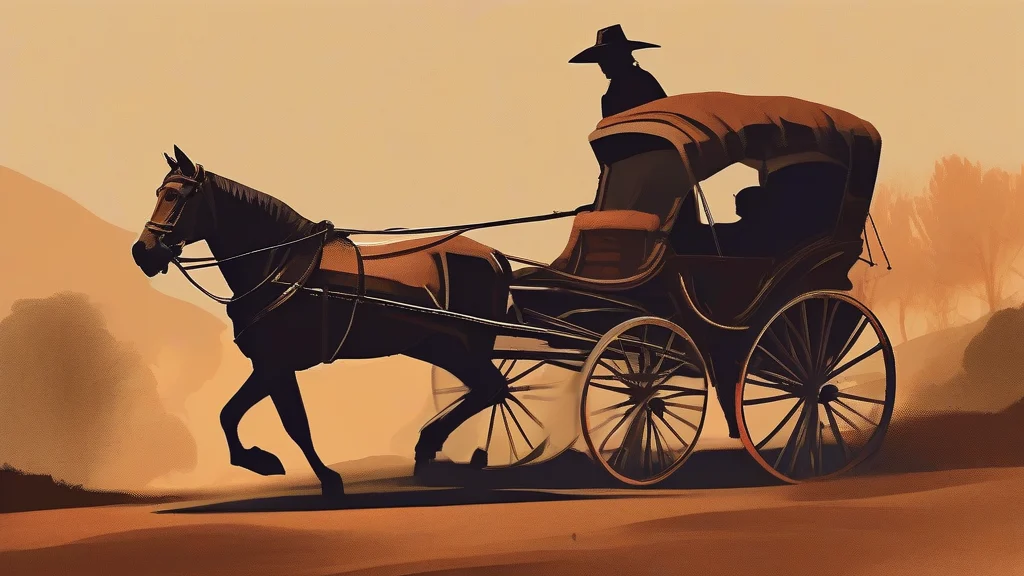
A calash is a light, low-slung horse-drawn carriage fitted with a folding hood, typically seating passengers on two facing benches. The term also names a distinctive woman's bonnet — large, hooded, and collapsible — that echoed the carriage's retractable top and was fashionable from roughly the mid-1700s into the early nineteenth century. Both senses derive from the French 'calèche', which itself came from a Central European source. Today 'calash' survives mainly in historical writing, museum descriptions, costume studies, and period fiction, where it evokes the elegance of pre-automobile travel and dress. Because the word is rare in modern speech, it carries a distinctly antique flavor; writers use it deliberately to signal a past era. Its most useful modern function is precision: where a generic 'carriage' might describe any horse-drawn vehicle, 'calash' identifies a specific open-bodied design with a collapsible top, making it valuable vocabulary for historians, curators, and readers of period literature alike.
nounA light, low-wheeled horse-drawn carriage with a folding hood or top; also, a woman's large hood-like bonnet of a style fashionable in the 18th and early 19th centuries.
- A light, low four-wheeled horse-drawn carriage with seats for two facing each other and a folding hood.
- A large, hood-shaped woman's bonnet that folds flat, popular in the late 18th and early 19th centuries.
"The newlyweds rode through the park in an open calash, its hood folded back against the summer sun."
"The museum's restored calash still has its original leather hood, which folds neatly behind the rear seat."
"In her portrait she wears a green silk calash drawn up over her powdered hair."
Standard pluralization with -es; occasionally seen in historical inventories and museum catalogs.
"The estate auction listed three calashes among its carriages."
Before convertibles had roofs that folded down, wealthy riders were cruising in calashes — carriages whose hoods collapsed at the pull of a strap.
Reviewed by Deb Chak, Editor. AI-assisted content curated by RJS Tech Solutions LLP.
Etymology of calash
'Calash' entered English in the seventeenth century by way of French 'calèche'. The French word was borrowed from a Central European language — often linked to Czech or Polish terms for wheeled vehicles — reflecting the spread of this carriage style westward across Europe. The Spanish-derived 'calesa' found in the Philippines is a later relative, showing how far the word traveled with European trade and colonization.
How calash is actually used
Now almost entirely historical; encountered chiefly in museum contexts, historical fiction, and accounts of 18th- and 19th-century dress and transport. The spelling 'calèche' is common in texts drawing directly on French sources.
Easily confused with calash
A calèche is essentially the same kind of hooded carriage under its French spelling, whereas 'calash' is the anglicized form; the two are variant renderings rather than different vehicles.
'Clash' is a verb or noun meaning a noisy collision or conflict, unrelated in meaning to 'calash', despite the similar ending sound.