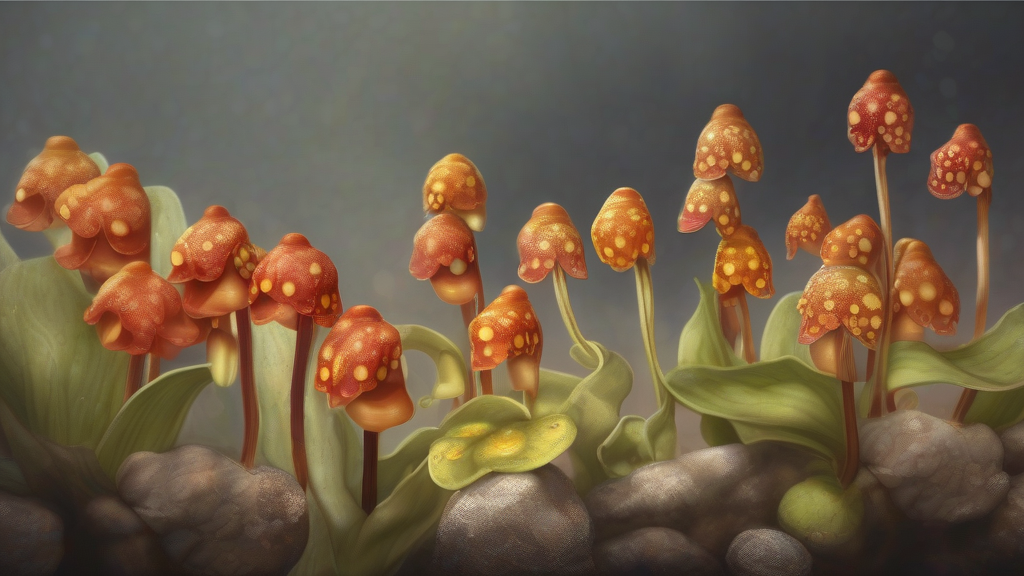
What does calceolaria mean?
Calceolaria is a genus of flowering plants, native mainly to Central and South America, best known for the unusual shape of its blossoms: each flower has a two-lipped form in which the lower lip swells into a pouch that resembles a tiny shoe, purse, or pocketbook. This striking appearance has earned the group its popular English names, slipperwort and pocketbook plant. Species such as Calceolaria crenatiflora have been widely hybridized, and florists' calceolarias are grown as ornamental bedding and greenhouse plants, prized for bright shades of yellow, orange, and red often marked with spotting or blotching. In horticultural writing, calceolaria functions as both the name of the genus and, informally, as a countable noun referring to an individual plant, with the plural usually given as calceolarias. Though long classified among the figworts in Scrophulariaceae, modern botany places it in its own family, Calceolariaceae.
nounA genus of flowering plants in the family Calceolariaceae, native chiefly to Central and South America, cultivated for their distinctive pouch- or slipper-shaped two-lipped flowers; commonly known as slipperworts or pocketbook plants.
- Any plant of the genus Calceolaria, especially one grown ornamentally for its pouch-shaped flowers.
- The genus Calceolaria itself as a botanical taxon.
"The greenhouse bench was crowded with calceolarias, their yellow pouches glowing like tiny slippers."
"She filled her conservatory pots with calceolarias for their cheerful, slipper-shaped blooms."
"Botanists once placed Calceolaria in the figwort family before it was moved into its own family, Calceolariaceae."
The regular anglicized plural is standard in gardening and horticultural writing; the Latin-style plural calceolariae appears occasionally in botanical contexts but is far less common.
"The nursery stocked dozens of calceolarias in shades of gold and rust."
Its flowers really do look like tiny leather purses — which is why Victorians nicknamed it the 'pocketbook plant.'
Reviewed by Deb Chak, Editor. AI-assisted content curated by RJS Tech Solutions LLP.
Etymology of calceolaria
The name comes from New Latin Calceolaria, itself derived from Latin calceolus, meaning 'a little shoe,' the diminutive of calceus ('shoe'), chosen because the inflated lower lip of the flower suggested a small slipper. The same Latin root underlies the botanical terms calceolate ('slipper-shaped') and calceiform ('shoe-shaped'). The generic name was established in early botanical literature, and the genus was traditionally placed in the figwort family until molecular work led to its placement in its own family, Calceolariaceae.
How calceolaria is actually used
Chiefly used by gardeners and horticulturists; in everyday speech the common names 'slipperwort' and 'pocketbook plant' are more frequent than the formal genus name. The word is treated as a count noun; both 'calceolarias' and the Latin-style 'calceolariae' occur, with the former more common in gardening prose.
Easily confused with calceolaria
Both have slipper-like blooms, but Cypripedium is the hardy lady's-slipper orchid genus, whereas Calceolaria is a separate genus of herbaceous plants unrelated to orchids.