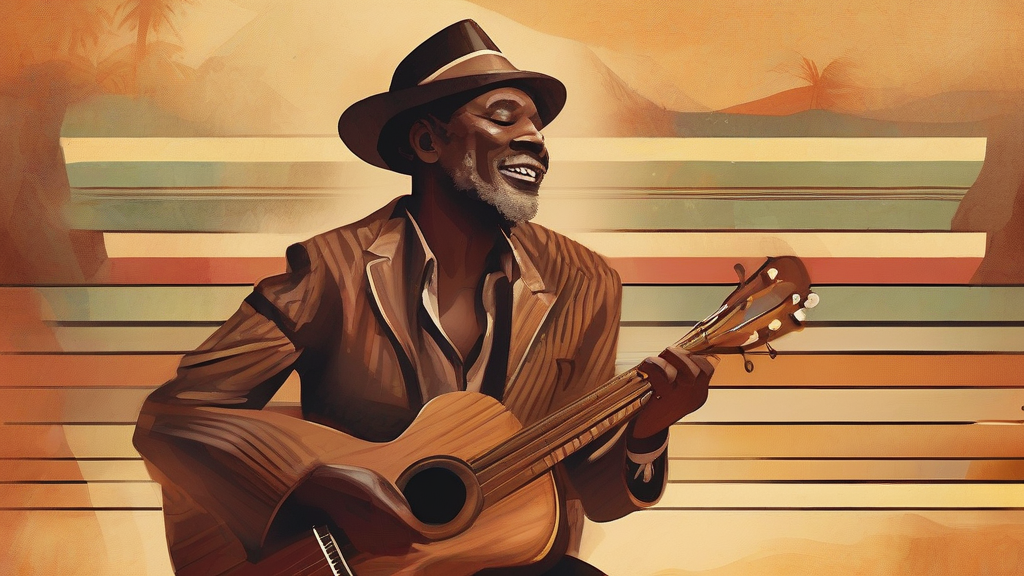
What does calypsonian mean?
A calypsonian is a singer or composer of calypso, the witty, rhythmically driven song tradition that emerged in Trinidad and Tobago and spread across the English-speaking Caribbean. Calypsonians are more than entertainers: they serve as social commentators, using clever wordplay, satire, and double entendre to critique politics, celebrate current events, and tell stories on behalf of their communities. The term is used with respect throughout the region, where figures such as the Mighty Sparrow and Lord Kitchener are regarded as national treasures. Annual competitions, most famously Trinidad's Calypso Monarch contest, crown the finest practitioners each Carnival season. For anyone writing or reading about Caribbean music, culture, or Carnival, calypsonian is the precise and respectful word for these singer-storytellers, capturing both their artistry and their role as voices of the people.
nounA performer, composer, or singer of calypso music, especially one skilled in the witty, socially observant style characteristic of Trinidadian calypso.
- A singer or composer of calypso music, especially in the Trinidadian tradition.
- More broadly, any performer associated with calypso-style topical, humorous, or satirical songs.
"The veteran calypsonian brought the crowd to its feet with a biting song about the island's politicians."
"The Mighty Sparrow is widely regarded as the greatest calypsonian of the twentieth century."
"At the carnival preliminaries, young calypsonians competed alongside seasoned veterans for a place in the finals."
Standard pluralization; commonly seen when referring to groups of performers at festivals or competitions.
"Dozens of calypsonians gathered in Port of Spain for the season's opening tent night."
Every year in Trinidad and Tobago, calypsonians battle for the title of Calypso Monarch — making this one of the few words for a musician that comes with a literal crown.
Reviewed by Deb Chak, Editor. AI-assisted content curated by RJS Tech Solutions LLP.
Etymology of calypsonian
The word calypsonian derives from calypso, the name of the Afro-Caribbean song genre that developed in Trinidad during the nineteenth century, combined with the suffix -ian, which denotes a person connected with something. The ultimate origin of the word calypso itself is uncertain: some scholars link it to the Greek kalyptein ('to conceal'), echoing the mythological nymph Calypso who concealed Odysseus, while others trace it to West African sources carried to the Caribbean by enslaved people. The derivative calypsonian arose in the early-to-mid twentieth century as calypso performance grew into an organized profession with tents, competitions, and titled champions.
How calypsonian is actually used
The word carries strong association with Trinidad and Tobago and the wider Anglophone Caribbean, where it is the standard, respectful term for a practitioner of the art form; it is used with pride rather than as a casual label. Outside the Caribbean it appears mainly in writing about Caribbean music and culture. The capitalized honorific titles Calypso King and Calypso Monarch are traditionally applied to champion calypsonians.
Easily confused with calypsonian
Calypso is the musical genre itself, while a calypsonian is the person who performs or composes it.