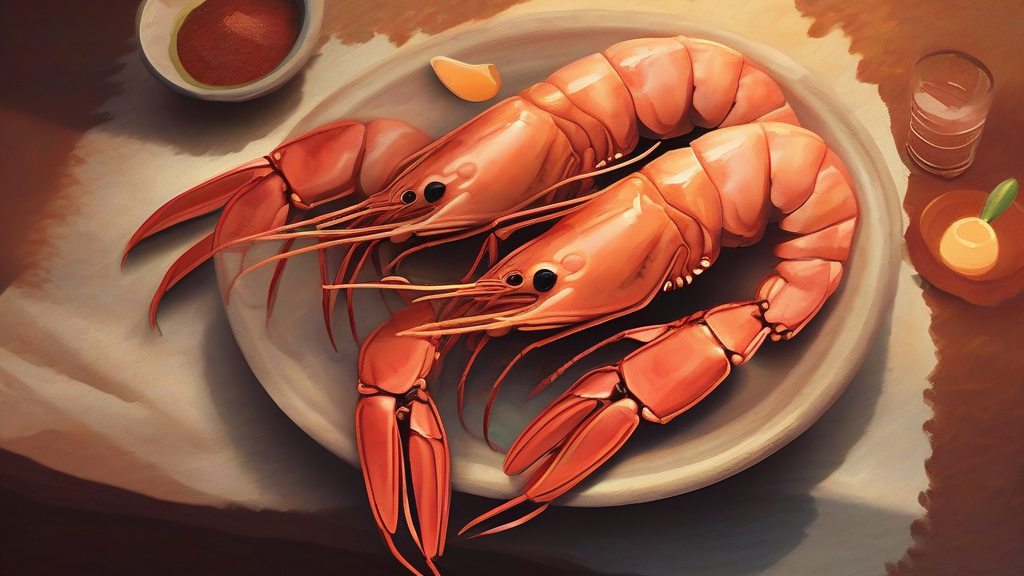
What does camaron mean?
Camaron denotes a large shrimp or prawn, and it entered English through Spanish, where 'camarón' has long been the standard word for the crustacean. It survives in English chiefly in culinary contexts, especially on the menus and in the food writing of the American Southwest, Texas, and California, where Mexican cooking traditions run deep. Dishes carry the Spanish plural form — camarones al ajillo (garlic shrimp), camarones a la diabla (deviled shrimp), grilled camarones — while the singular anglicization appears in descriptive prose. The word ultimately descends from the Latin 'cammarus', meaning crayfish, which also gave Portuguese its equivalent term 'camarão'. For most speakers outside these regional cuisines, ordinary words like shrimp or prawn do the job; 'camaron' is valued precisely for the authentic, place-specific flavor it lends to descriptions of Gulf and Pacific coast seafood.
nounA large shrimp or prawn, especially as used in Spanish-influenced cooking of the southwestern United States and Mexico.
- A large shrimp or prawn, particularly in the cuisine of Mexico and the American Southwest.
"The menu featured butterflied camarones grilled over mesquite and served with chipotle butter."
"She ordered camarones a la diabla, the spiciest dish on the menu."
"Fresh camaron, straight off the Gulf boat, needs little more than garlic and lime."
Both the naturalized English plural 'camarons' and the Spanish 'camarones' are used; the Spanish form predominates in menus and recipe titles.
"A pound of camarones, peeled and deveined, is all the recipe requires."
The shrimp on your Mexican seafood platter traces its name straight back to the Latin word for crayfish — the Romans were naming these creatures two thousand years ago.
Reviewed by Deb Chak, Editor. AI-assisted content curated by RJS Tech Solutions LLP.
Etymology of camaron
Camaron was borrowed into English from Spanish 'camarón', the common Spanish word for a shrimp or prawn. The Spanish term itself derives from Latin 'cammarus', which denoted a crayfish or large crustacean; this same Latin root produced the Portuguese cognate 'camarão'. The word entered English usage primarily through the regional cuisines of northern Mexico and the southwestern United States, where Spanish culinary vocabulary was absorbed alongside the dishes themselves.
Related word forms
How camaron is actually used
In American English the anglicized form 'camaron' appears mostly in menus and food writing; the Spanish plural 'camarones' is often retained in dish names such as 'camarones al ajillo'. In everyday speech most English speakers simply say 'shrimp' or 'prawn'.
Easily confused with camaron
Camaraderie is mutual trust and friendship among a group, while camaron is simply a shrimp or prawn.