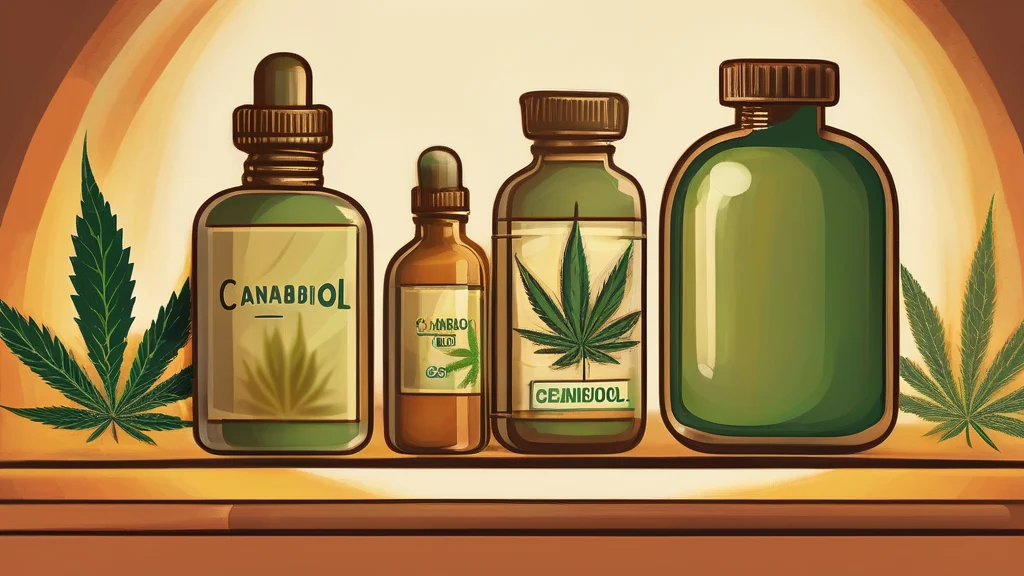
What does cannabidiol mean?
Cannabidiol, better known by its abbreviation CBD, is one of the many naturally occurring chemical compounds called cannabinoids found in cannabis plants. Unlike tetrahydrocannabinol (THC), its more notorious counterpart, cannabidiol does not produce a euphoric 'high' or otherwise intoxicate the user, which has made it the focus of intense scientific interest and a booming wellness industry. It is typically consumed as an oil taken under the tongue, or in capsules, edibles, creams, and even pet products, and it has been approved in some countries as a medicine for certain rare forms of epilepsy. In everyday usage the short form CBD dominates, while the full word 'cannabidiol' tends to appear in clinical literature, regulatory documents, and ingredient labels, giving it a formal, scientific register. The word derives from 'cannabis', tracing back through Latin to the ancient Greek kánabis, the same root that gave English 'canvas'. Whether viewed as a promising therapeutic agent or simply a cultural phenomenon, cannabidiol has become one of the most discussed substances in modern health conversations.
nounA non-intoxicating chemical compound (cannabinoid) found in cannabis plants, widely used in oils, edibles, and other products and studied for potential therapeutic effects.
- The specific cannabinoid compound C₂₁H₃₀O₂, second most abundant in cannabis, valued for being non-psychoactive.
- Any medicinal or consumer product containing this compound, such as CBD oil, capsules, or topical preparations.
"She takes a few drops of cannabidiol oil each evening to help her unwind before bed."
"Researchers have been investigating whether cannabidiol can reduce anxiety without causing intoxication."
"The pharmacy stocks both cannabidiol tinctures and topical balms over the counter."
As a chemical substance, cannabidiol is uncountable and has no plural; quantities are expressed with units such as milligrams.
"Each gummy contains ten milligrams of cannabidiol."
Unlike its famous cousin THC, cannabidiol won't get you high — yet it has quietly become a multi-billion-dollar industry found everywhere from pharmacies to pet treats.
Reviewed by Deb Chak, Editor. AI-assisted content curated by RJS Tech Solutions LLP.
Etymology of cannabidiol
The name cannabidiol is built directly from 'cannabis', the genus name of the plant from which the compound is extracted, combined with '-diol', a chemical suffix denoting an alcohol with two hydroxyl groups. The root traces back through New Latin cannabis to the ancient Greek kánabis (κάνναβις), meaning hemp — the same Greek word that, via Latin and Old French, also gave English the words 'canvas' and 'canvass'. The compound was first isolated from Cannabis sativa in the late 1930s and early 1940s, and its name entered scientific vocabulary at that time as chemists systematically catalogued the plant's constituents.
Related word forms
How cannabidiol is actually used
In everyday speech and product labelling, the abbreviation CBD is far more common than the full term; 'cannabidiol' itself carries a clinical, scientific register and appears mostly in medical writing, pharmacology, and ingredient lists. It is uncountable when referring to the substance generally.
Easily confused with cannabidiol
Tetrahydrocannabinol (THC) is the psychoactive compound in cannabis that produces a 'high', whereas cannabidiol (CBD) is non-intoxicating.