What does cantus mean?
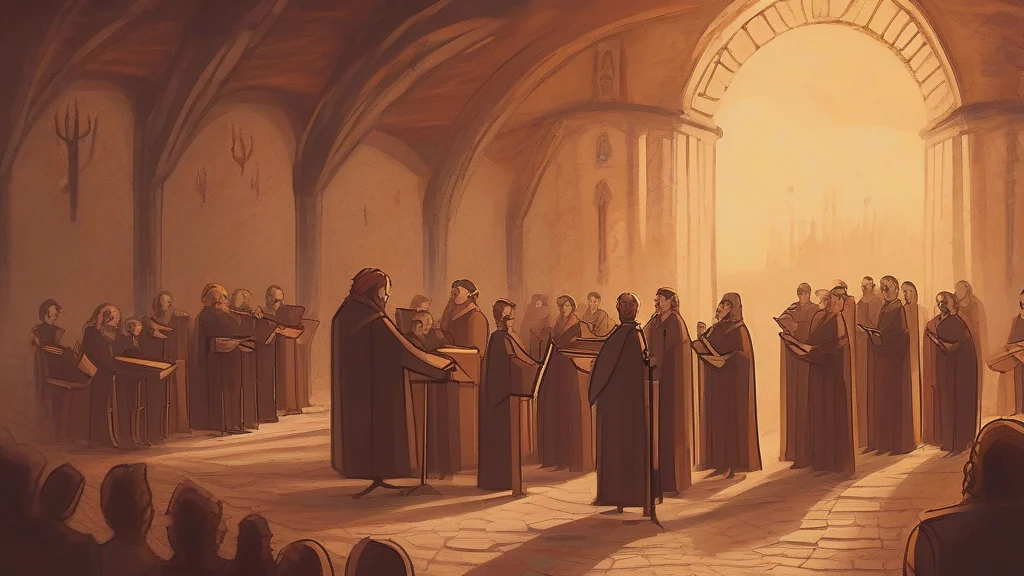
Cantus is a noun borrowed directly from Latin, where it simply means 'song' or 'melody'. In modern English it survives chiefly as a technical term in music theory and musicology. Its best-known use is in the phrase 'cantus firmus', literally 'fixed song', referring to the pre-existing melody — often drawn from Gregorian chant — around which composers of the Middle Ages and Renaissance constructed additional contrapuntal voices. More broadly, cantus can denote any principal melodic line or, historically, a body of sacred chant such as plainchant. Because it is a specialist term, cantus appears mostly in textbooks, scholarly writing on early music, and conservatory training rather than casual conversation. For musicians, however, it carries real weight: the disciplined practice of writing against a cantus firmus has shaped Western ideas of harmony and voice-leading for centuries, making the word a small but durable piece of music's intellectual heritage.
A melody or vocal line; especially the principal melodic voice in polyphonic music, as in cantus firmus.
"Each student was given a cantus to harmonize in strict counterpoint."
Most common in the fixed phrase 'cantus firmus'; otherwise found in academic and early-music contexts.
Medieval or Renaissance sacred chant; plainchant.
"The choir performed selections from the medieval cantus repertoire."
Historical usage, largely superseded by terms like 'plainchant'.
As a Latin borrowing, cantus is typically left unchanged in the plural in technical writing, though the anglicized 'cantuses' also occurs.
"Several cantus from the same source appear throughout the codex."
Every species of counterpoint that composers have learned for five centuries is built on a single slow-moving voice called the cantus firmus — the 'fixed song' at the heart of Western harmony.
Reviewed by Deb Chak, Editor. AI-assisted content curated by RJS Tech Solutions LLP.
Etymology of cantus
Cantus comes straight from Latin cantus, meaning 'song' or 'the act of singing', derived from the verb canere ('to sing'). It shares this root with English words such as 'chant' (via French chanter), 'incantation', 'cantata', and 'accent'. The term entered musical Latin usage in the Middle Ages and passed into English primarily through the vocabulary of church music and later music theory.
How cantus is actually used
A technical term used mainly in musicology, early-music performance, and music theory pedagogy; rare in everyday speech. Often encountered in the fixed phrase 'cantus firmus'.
Easily confused with cantus
Canthus is the anatomical term for the corner of the eye where the eyelids meet, whereas cantus is a musical term for melody or chant.