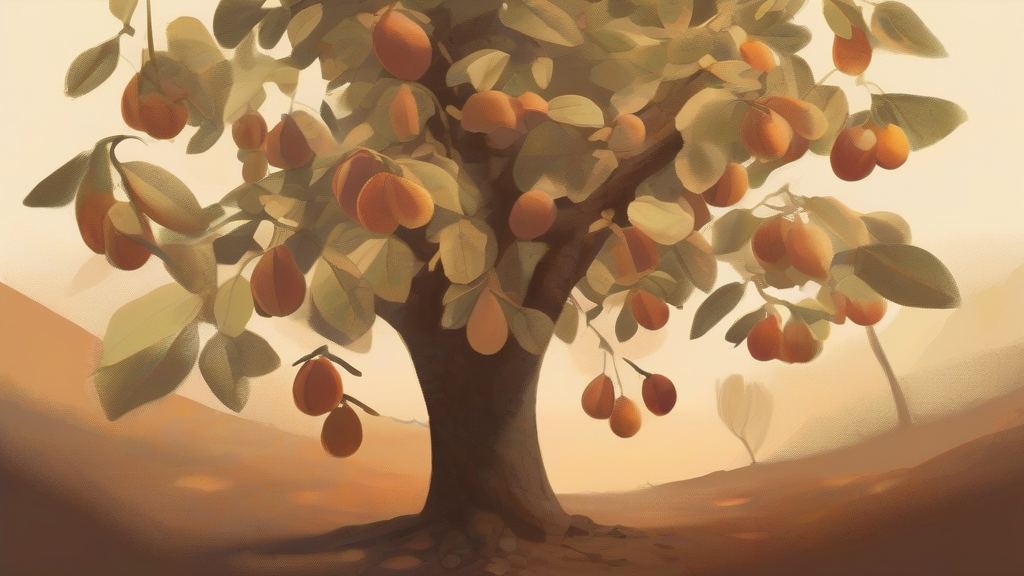
What does caprifig mean?
A caprifig is the wild form of the fig tree, Ficus carica var. caprificus, sometimes called the goat fig. Its small fruits are generally dry, hollow, and unpalatable, yet the tree plays an indispensable role in producing some of the world's finest table figs. Varieties such as the Smyrna fig cannot set fruit without cross-pollination, and the caprifig supplies both the pollen and the habitat for the minute fig wasp (Blastophaga psenes) that delivers it. Growers in Mediterranean and Near Eastern regions traditionally hang caprifig branches among their cultivated trees — a practice known as caprification — so the wasps can shuttle pollen from the wild fruit to the edible crop. Because of this partnership, the caprifig occupies a curious place in agriculture: a tree whose own fruit is essentially worthless, yet without which prized fig varieties would fail. The word appears mainly in botanical, horticultural, and historical writing rather than everyday speech.
A wild, largely inedible variety of the fig tree (Ficus carica var. caprificus) whose fruit provides pollen and breeding sites for fig wasps, enabling pollination of Smyrna-type edible figs; also called goat fig.
"Without a nearby caprifig, his Smyrna fig trees produced no fruit at all."
Used chiefly in botanical and horticultural contexts; the related practice of using caprifigs for pollination is called caprification.
The dry, unpalatable fruit of the caprifig tree, which contains the gall-flowers in which fig wasps develop.
"Each spring she collected caprifigs from the wild trees and hung them along the orchard rows."
Standard plural, used when referring to multiple trees or multiple fruits of the caprifig.
"Ancient growers transported caprifigs carefully so the wasps inside would survive the journey."
The caprifig's figs are so worthless that ancient growers hung them in orchards purely as bait — for a wasp no bigger than a gnat that pollinates their precious Smyrna figs.
Reviewed by Deb Chak, Editor. AI-assisted content curated by RJS Tech Solutions LLP.
Etymology of caprifig
Caprifig comes from the Latin caprificus, a compound of caper ('goat') and ficus ('fig'), literally 'goat fig' — likely because goats were thought to browse on the wild trees or because the name marked it as coarse and inferior compared to cultivated figs. English adopted the term in the early 17th century, directly from Latin. It shares the root caper- with words such as caprine and caper, all tracing back to Proto-Indo-European *kapro-.
Related word forms
How caprifig is actually used
Caprifig is a technical term used mainly in botany, horticulture, and agricultural literature; it is rare in everyday conversation. The word is always used of plants and fruit, not people or animals.
Easily confused with caprifig
The common fig is the familiar edible fruit-bearing tree, while the caprifig is its wild, largely inedible relative valued only as a source of pollen and fig wasps.