What does caracul mean?
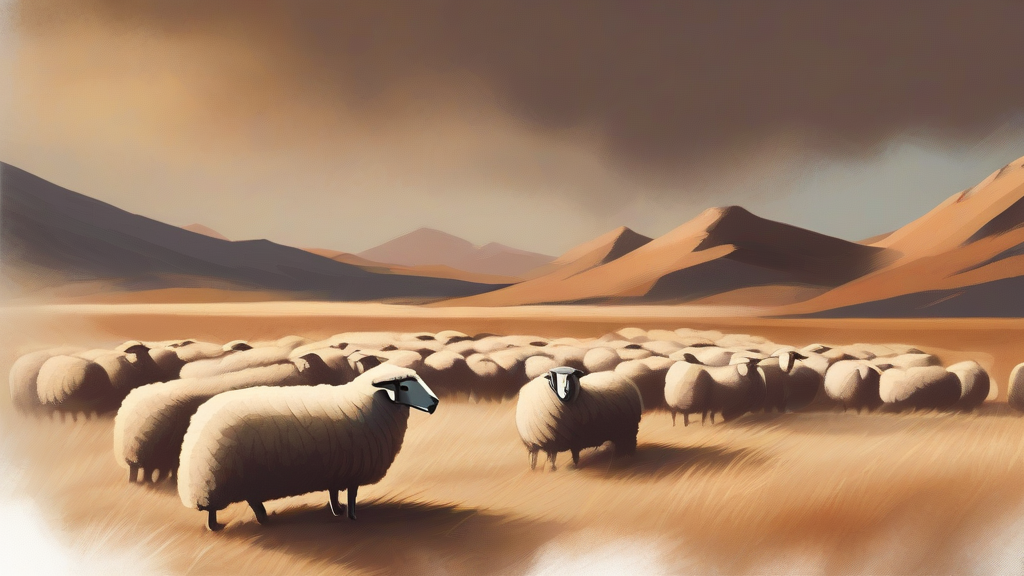
Caracul refers to one of two closely linked things: a hardy breed of fat-tailed sheep originally from the steppes and deserts of Central Asia, and the distinctive curly fur taken from the pelts of its lambs. The name comes from the Qaraqul ('black lake') region near Bukhara in present-day Uzbekistan, which gave the breed both its name and its fame. The fur — tightly curled, glossy, and typically jet black — became a luxury textile known in the trade under names such as astrakhan and Persian lamb, adorning hats, collars, and coats from the late nineteenth century onward, particularly in Europe, Russia, and among diplomatic and military dress. The sheep itself remains economically important across Central Asia and parts of southern Africa for meat, milk, and coarse wool. Today the term appears mostly in historical, fashion, and agricultural contexts, evoking vintage elegance.
nounCaracul is a variant spelling of karakul, denoting either a breed of hardy fat-tailed sheep of Central Asian origin, or the lustrous black curly fur made from the pelt of a newborn or fetal karakul lamb.
- The curly lustrous fur obtained from the pelt of a young karakul lamb.
- A breed of hardy, fat-tailed domestic sheep of Central Asian origin, raised for its pelts, meat, and coarse wool.
"She wore an elegant caracul coat to the winter gala."
"The vintage shop displayed a caracul coat with tight, glossy curls."
"Karakul sheep are prized across Central Asia for their resilient fleeces and distinctive curled lamb pelts."
Pluralizes regularly when referring to individual animals or garments; when used as a mass noun for the fur material, it is usually uncountable.
"The flock included several prize-winning caraculs."
This sheep's name literally means 'black lake' in Uzbek — and for centuries, its newborn lambs' curly pelts were so prized they were called 'the crown jewels of furs.'
Reviewed by Deb Chak, Editor. AI-assisted content curated by RJS Tech Solutions LLP.
Etymology of caracul
Caracul entered English in the nineteenth century as a borrowing of karakul, itself derived via Russian from the Uzbek place-name Qaraqul ('black lake'), referring to a region near Bukhara where the sheep breed originated. The word belongs to the large family of English loanwords absorbed from Persian and Turkic languages through trade routes, alongside terms like bazaar and caravan. The spelling variant caracul reflects French influence in early fur-trade terminology, though karakul has since become the dominant form.
How caracul is actually used
Caracul is chiefly a spelling variant of karakul and appears most often in older British texts on textiles and fashion. In modern usage, 'karakul' or the trade terms 'astrakhan' and 'Persian lamb' are more common for the fur. The fur sense carries connotations of luxury and vintage glamour.
Easily confused with caracul
Chinchilla is soft grey-blue fur from a South American rodent, whereas caracul is tightly curled black or brown fur from a Central Asian lamb.