What does carapace mean?
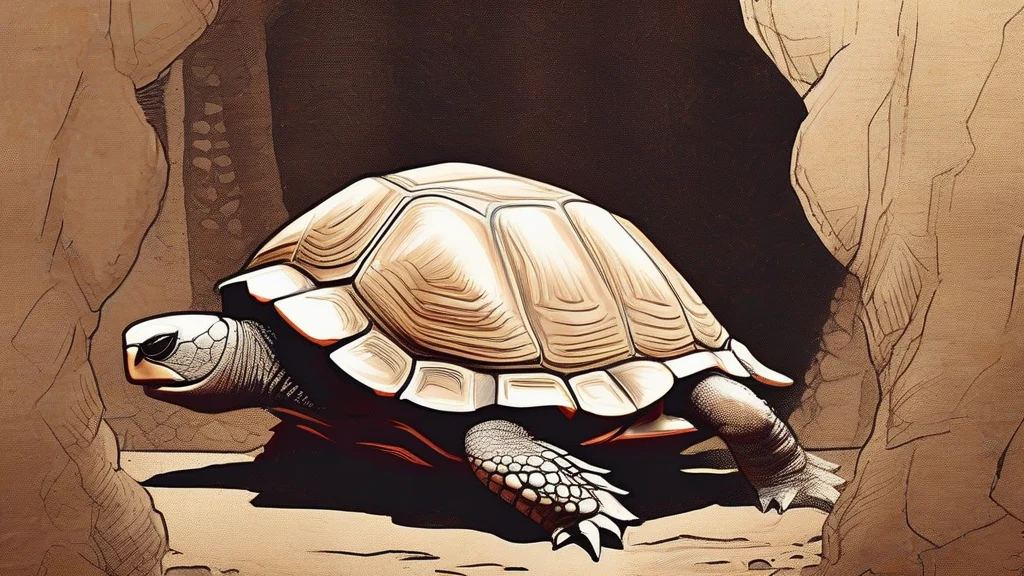
A carapace is the hard, protective upper shell of certain animals — most familiarly the domed back of a turtle or tortoise, but also the armored casing of crabs, lobsters, and other crustaceans. In anatomy, it is distinguished from the plastron, the flatter plate beneath a turtle's body. Beyond biology, the word is widely used figuratively to describe any tough outer layer or defensive posture: a person may retreat behind a carapace of irony, formality, or silence to keep the world at arm's length. This metaphorical use gives the word literary resonance, appearing frequently in fiction and criticism to evoke guardedness or resilience. Borrowed into English from French in the early seventeenth century, with roots likely reaching further back through Iberian languages, carapace carries a slightly formal, scientific tone while remaining vivid and concrete — a precise choice when describing both shells in nature and shields of the self.
nounThe hard protective shell covering the back of animals such as turtles, tortoises, and crustaceans. Figuratively, a protective outer layer or defensive attitude that shields a person from harm or scrutiny.
- The hard upper shell of a turtle, tortoise, or crustacean.
- A protective covering or hardened exterior, used figuratively for emotional or psychological defenses.
"The loggerhead turtle's carapace bore the scars of decades at sea."
"Biologists measure the carapace length of each hatchling before releasing it into the surf."
"Years in public office left her behind an impenetrable carapace of caution."
Regular English plural. Used freely for multiple shells or, figuratively, multiple defensive layers.
"The beach was littered with the empty carapaces of horseshoe crabs."
English borrowed 'carapace' from French, which likely got it from Spanish — and it may trace all the way back to an ancient Gaulish word for shell.
Reviewed by Deb Chak, Editor. AI-assisted content curated by RJS Tech Solutions LLP.
Etymology of carapace
Carapace entered English in the early seventeenth century from French, which took it from Spanish 'carapacho', meaning the shell of a tortoise or crustacean. The ultimate origin is uncertain; some scholars link it to a pre-Roman, possibly Celtic (Gaulish) substrate word. Related Romance forms include Catalan and Occitan variants referring to shells and coverings.
Related word forms
How carapace is actually used
Mostly formal, scientific, or literary register. The figurative sense is common in journalism and literary criticism, often describing emotional guardedness. Plural is standard: carapaces.
Easily confused with carapace
A plastron is the flat underside of a turtle's shell, whereas the carapace is the domed upper part.