What does chitin mean?
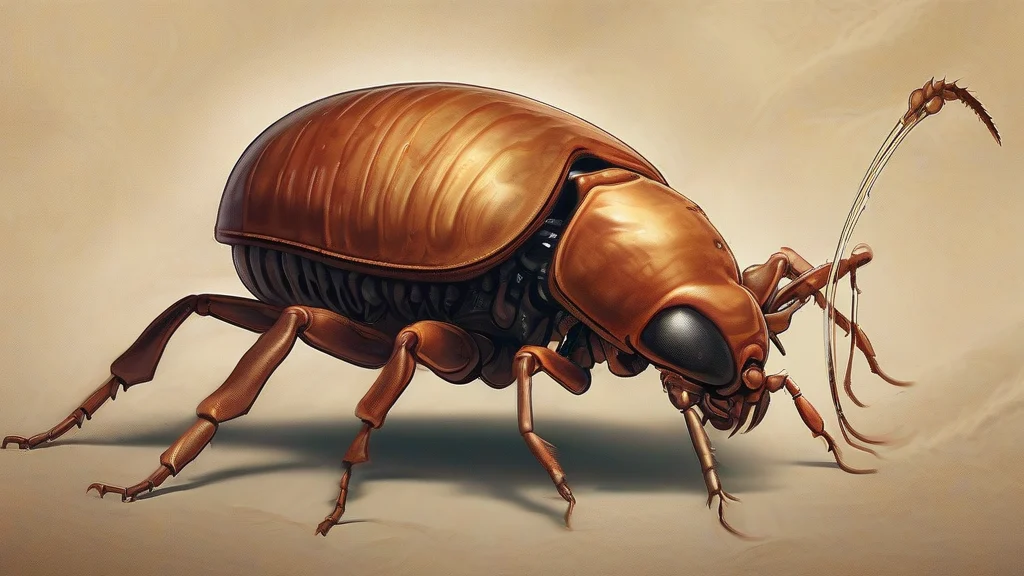
Chitin is a strong, naturally occurring polysaccharide — a complex sugar-based polymer — that provides structural support to many living organisms. It is best known as the principal component of the exoskeletons of insects, crabs, lobsters, and other arthropods, where it combines with proteins and often minerals to produce shells that are both lightweight and remarkably durable. Chitin also appears in less obvious places: it reinforces the cell walls of fungi and is found in the beaks and gladiuses of cephalopods such as squid. Because it cannot stretch, many arthropods must periodically shed and regrow their chitinous covering through moulting in order to grow. In scientific writing chitin is treated as an uncountable noun and is typically discussed in formal or technical contexts spanning biology, medicine, and materials science. Researchers value it for its biodegradability and potential uses ranging from wound dressings to water purification.
nounA tough, semi-transparent nitrogen-containing polysaccharide that forms the outer skeleton of insects, crustaceans, and other arthropods, and is also found in the cell walls of fungi. It is one of the most abundant organic materials in nature.
- A long-chain polymer of N-acetylglucosamine that serves as a structural material in the exoskeletons of arthropods and in the cell walls of fungi.
"The crab's shell owes its remarkable strength to the chitin woven into its structure."
"Insects must periodically moult because their rigid chitin armour cannot expand as they grow."
"Fungal cell walls contain chitin rather than the cellulose found in plants."
Chitin is so widespread that, after cellulose, it's thought to be one of the most abundant organic polymers on Earth — yet most people have never heard of it.
Reviewed by Deb Chak, Editor. AI-assisted content curated by RJS Tech Solutions LLP.
Etymology of chitin
The word chitin entered English from French 'chitine', coined in the early 19th century by the French scientist Henri Braconnot, who isolated the substance from fungi. The French term derives ultimately from the Greek 'chiton', meaning a tunic or coat, a reference to the protective outer layering the substance provides in insects and shellfish. The related adjective 'chitinous' shares this Greek root, as does 'chiton', which can refer either to the ancient Greek garment or to a group of shelled marine molluscs.
Related word forms
How chitin is actually used
Chitin is a technical term used chiefly in biology, entomology, mycology, and chemistry. It is an uncountable noun in standard usage, so it takes no plural form in ordinary scientific writing. The adjective 'chitinous' is commonly used to describe things composed of or resembling chitin.
Easily confused with chitin
A kitten is a young cat, whereas chitin is the structural polysaccharide found in arthropod shells and fungal cell walls.
A chiton is a type of marine mollusc (or an ancient Greek garment), while chitin is the chemical substance that stiffens many shells and cell walls.