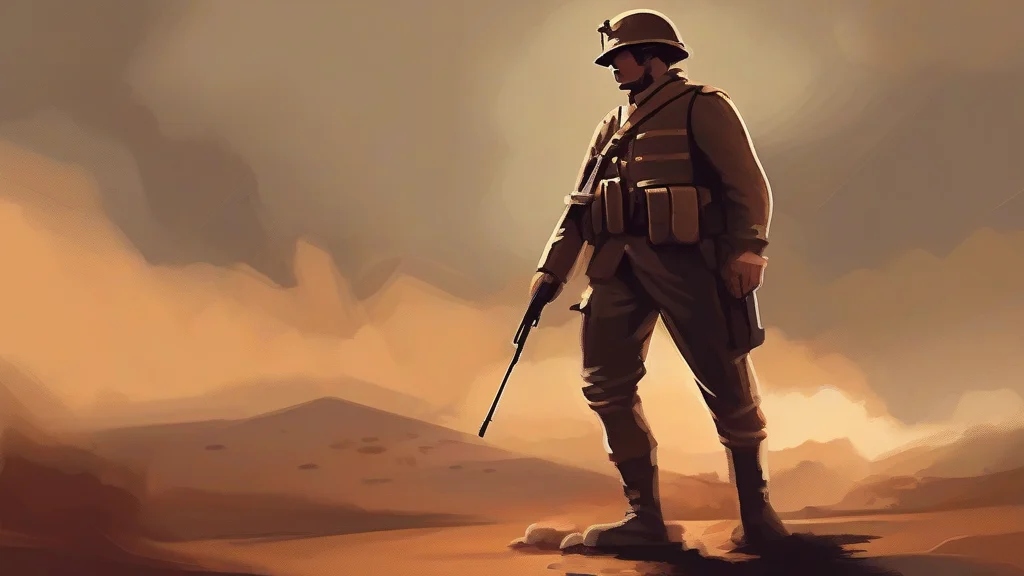
What does carbineer mean?
A carbineer is a soldier whose primary weapon is a carbine — a short-barrelled, lightweight version of a rifle designed for use on horseback or by troops needing greater mobility than a full-length musket allowed. The term belongs mainly to military history: from roughly the seventeenth through the nineteenth centuries, European armies fielded carbineers among their cavalry and mounted infantry, where the compact firearm proved far easier to handle in the saddle than a long musket. The word is formed from 'carbine' plus the suffix '-eer', the same ending that produced 'musketeer' and 'pioneer'. Today 'carbineer' survives largely in historical writing, regimental titles, museums, and period fiction rather than in everyday speech. Its alternative spelling 'carabineer' is equally acceptable, both deriving from the French 'carabine', whose own deeper origin remains uncertain.
nounA soldier armed with a carbine, a short-barrelled lightweight rifle; historically a member of a cavalry or mounted infantry unit equipped with such firearms.
- A soldier armed with a carbine, especially in a cavalry or mounted infantry unit.
"The carbineer slung his weapon across his back and urged his horse up the ridge."
"The regiment's carbineers dismounted and took up positions along the stone wall."
"In the museum display, a carbineer's uniform hung beside the short-barrelled weapon that gave him his name."
Standard plural, used when referring to units or groups of such soldiers.
"Two hundred carbineers rode out at dawn to scout the enemy's flank."
Reviewed by Deb Chak, Editor. AI-assisted content curated by RJS Tech Solutions LLP.
Etymology of carbineer
Carbineer derives from 'carbine', borrowed into English from French 'carabine', combined with the suffix '-eer', which forms agent nouns denoting people associated with a thing or activity (as in 'musketeer'). The French 'carabine' entered the language around the sixteenth century, but its ultimate etymology is uncertain, so any deeper root cannot be stated with confidence. The agent form 'carbineer' arose as military vocabulary for soldiers so armed, parallel to formations like 'musketeer'; the variant spelling 'carabineer' reflects the French source directly.
How carbineer is actually used
The word is chiefly historical and military in register, most often encountered in accounts of 17th- to 19th-century warfare. It appears relatively rarely in modern usage except in historical fiction, military history, and regimental names.
Easily confused with carbineer
A carbine is the short rifle itself, whereas a carbineer is the soldier who carries one.
Carabineer is simply an alternative spelling of the same word, not a different meaning.