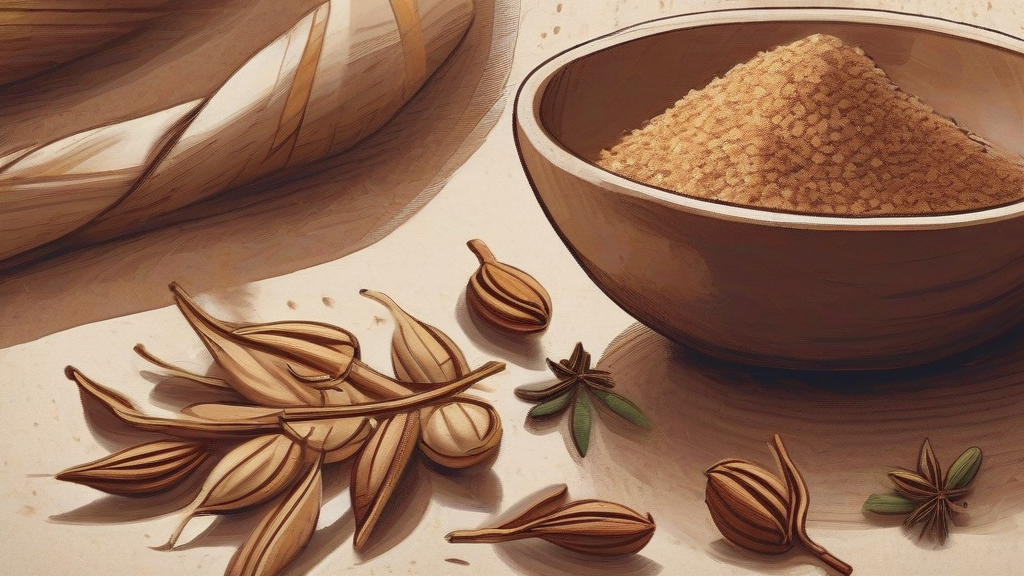
What does cardamon mean?
Cardamon is a variant spelling of cardamom, the name of an intensely aromatic spice made from the small seed pods of plants in the ginger family, chiefly Elettaria cardamomum, native to southern India and Sri Lanka. The pods may be used whole — often crushed to release their flavour — or split open so the tiny dark seeds inside can be ground. The taste is warm, sweet, and slightly resinous, with citrus and herbal notes that make cardamon equally at home in savoury dishes such as curries and biryanis and in sweets, baked goods, coffees, and teas. Both spellings are accepted in British and American English, though cardamom is the more frequent form; cardamon appears consistently enough in dictionaries and cookery writing to be considered standard. The word traces back through Latin and Greek to a Dravidian source, reflecting the spice's ancient trade history from South Asia to the Mediterranean and beyond.
nounA variant spelling of cardamom: the aromatic seed pods of a plant of the ginger family, used as a spice, especially in Indian and Middle Eastern cooking.
- The aromatic seed pods (capsules) of Elettaria cardamomum or related plants of the ginger family, used whole or ground as a pungent, sweetly aromatic spice.
"She ground fresh cardamon into the coffee to give it a warm, resinous fragrance."
"Add three crushed cardamon pods to the rice while it simmers."
"Her chai recipe calls for freshly ground cardamon along with ginger and cloves."
As a mass noun referring to the ground spice, cardamon has no plural. When counting individual pods or seeds, English typically uses the partitive construction 'cardamon pods' or 'cardamon seeds' rather than a plural of the headword itself.
"Crush two cardamon pods before adding them to the curry."
Cardamom — however you spell it, including 'cardamon' — was so prized by ancient traders that Vikings are said to have carried it home from Constantinople over a thousand years ago.
Reviewed by Deb Chak, Editor. AI-assisted content curated by RJS Tech Solutions LLP.
Etymology of cardamon
The word entered English in the early modern period from Latin cardamomum, itself borrowed from Greek kardamōmon. The Greek term is generally thought to derive ultimately from a Dravidian language of southern India, where the spice originated, though the precise source language is uncertain. The spelling cardamon arose as a natural variant of cardamom and has been recognised in English dictionaries for centuries; both forms denote the identical spice.
How cardamon is actually used
"Cardamon" is a well-established variant spelling of "cardamom," found in major dictionaries and used in both British and American English, though "cardamom" is considerably more common overall. The word refers to the same spice under either spelling. In cooking contexts it appears frequently alongside words like pods, seeds, and ground, and it is associated especially with South Asian, Scandinavian, and Middle Eastern cuisine.
Easily confused with cardamon
Cardamom is the standard English spelling of the spice, while cardamon is an accepted but less common variant spelling referring to exactly the same thing.
Cinnamon is a different spice, derived from tree bark rather than the seed pods of a ginger-family plant, despite both being warm aromatic spices.