What does careener mean?
A careener is, most broadly, something that careens — a person, animal, vehicle, or vessel that moves with a wild, lurching, or headlong momentum. The word is built on the verb 'careen,' which itself carries two strands of meaning: the familiar modern sense of rushing recklessly or swaying from side to side, and the older nautical sense of tipping a ship on its side to clean or repair its hull. In that maritime context, a careener was a ship deliberately beached and heeled over, keel exposed to the air. The term is rare today, appearing mainly in historical writing about seafaring and in vivid descriptive prose where a writer wants a compact noun for a thing in uncontrolled motion. Its connotations are dynamic rather than moral: a careener suggests speed, imbalance, and drama, not wrongdoing. Readers will meet the word most often through its root verb, but the noun remains a precise, evocative choice when ordinary words like 'runner' or 'mover' feel too tame.
One that careens; a person, vehicle, or vessel that moves with a lurching, swaying, or headlong motion.
"The sled shot past us, a careener of wood and runners barely under control."
Figurative use is rare and mostly literary.
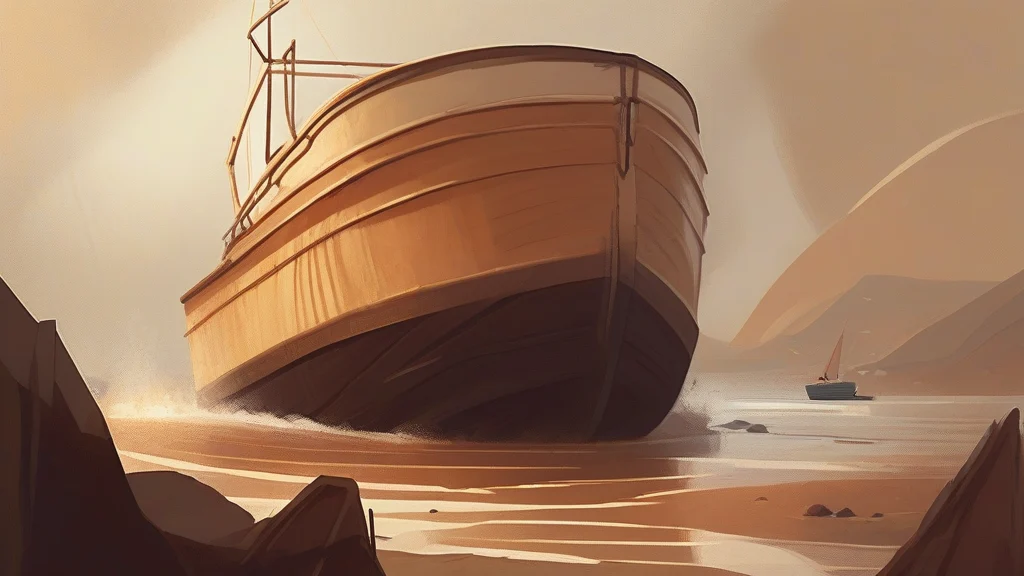
(Nautical) A ship laid on one side, usually on a beach at low tide, so that its bottom could be cleaned, caulked, or repaired.
"The logs record that the brig spent three weeks as a careener on the mudflats before her hull was refitted."
Standard regular plural; used for both the figurative sense (things that lurch) and the historical nautical sense.
"The harbor once served as a haven for careeners awaiting hull repairs."
Before 'career' came to mean your job, it meant a full-speed gallop — and a careener was something hurtling along that same reckless track.
Reviewed by Deb Chak, Editor. AI-assisted content curated by RJS Tech Solutions LLP.
Etymology of careener
'Careener' derives from the verb 'careen,' which entered English in the late 16th or early 17th century from French 'caréner,' meaning to set a ship's keel above water for cleaning. The French term traces back to Latin 'carina,' meaning keel or the hull of a boat. The sense of lurching or swaying developed by association with ships heeling over under way, and by extension the agentive noun 'careener' came to denote either a vessel being careened or anything moving in that wild, tilting fashion.
Related word forms
How careener is actually used
Rare in everyday English; the nautical sense appears chiefly in maritime histories of the age of sail, while the figurative sense ('one that lurches') is uncommon and largely confined to descriptive or literary writing.
Easily confused with careener
Career as a noun means an occupation or profession, while careener refers to something that lurches or sways wildly — the two share Latin ancestry but differ entirely in meaning.