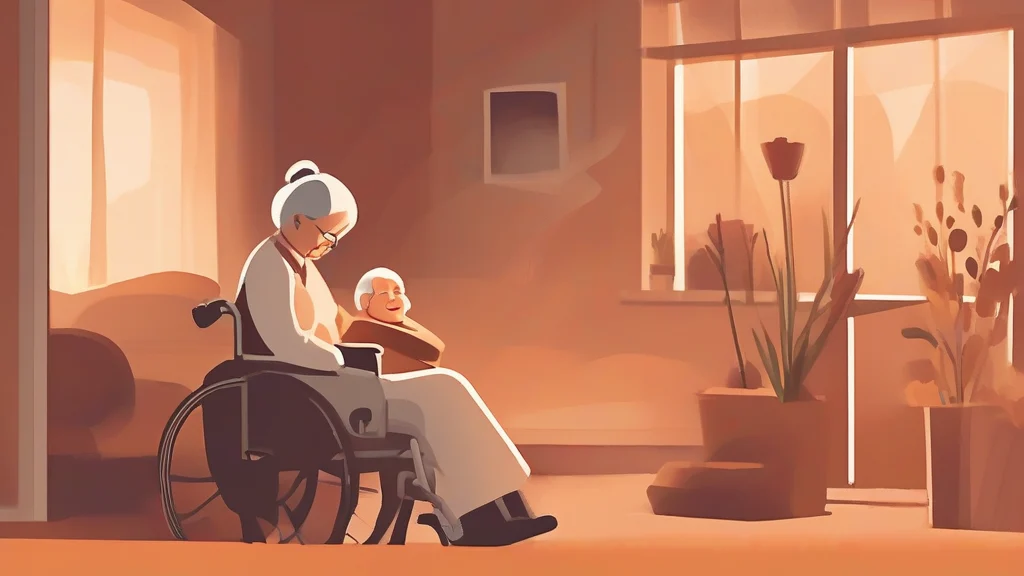
What does caregiving mean?
Caregiving refers to the practice of providing care — both practical assistance and emotional support — to a person who cannot fully care for themselves, such as an elderly parent, a chronically ill relative, or someone with a disability. It may be paid work, as with professional nurses and home health aides, or unpaid labor performed by family members and friends, which is often called informal or family caregiving. The word functions as an uncountable noun but also appears attributively in phrases like 'caregiving duties' or 'caregiving role.' Its tone is generally neutral to compassionate, and it is central to discussions of aging populations, healthcare policy, and burnout among those who provide long-term care at home. Related forms include 'caregiver,' the person who provides the care. Though especially prevalent in American English, the concept it names — tending to the vulnerable — is universal, making the term increasingly common in global health and social policy writing.
nounThe activity or profession of providing care for a person who is ill, elderly, disabled, or otherwise unable to fully care for themselves. It encompasses both the practical tasks involved and the emotional support offered to the person receiving care.
- The act or practice of providing physical and emotional care to someone who is ill, elderly, or disabled, whether professionally or informally within a family.
- (Attributive use) Relating to or involving such care, as in 'caregiving duties' or 'caregiving role'.
"After her mother's stroke, she devoted herself to full-time caregiving while balancing a demanding career."
"Informal caregiving by family members saves health systems billions each year."
"She found the emotional weight of caregiving harder than the physical demands."
Millions of people are unpaid caregivers for family members — making caregiving one of the largest 'workforces' in the world that nobody officially employs.
Reviewed by Deb Chak, Editor. AI-assisted content curated by RJS Tech Solutions LLP.
Etymology of caregiving
Caregiving is a compound formed from two native English elements: 'care,' from Old English 'caru' meaning sorrow, anxiety, or concern, and 'give,' from Old English 'giefan.' Both roots trace back through Proto-Germanic origins shared with cognates in Dutch, German, and other Germanic languages. The compound emerged in modern American English, gaining widespread currency in the late twentieth century as attention turned to the needs of aging populations and home-based care.
Related word forms
How caregiving is actually used
The term is neutral to warm in connotation and widely used in healthcare, social work, and policy contexts. It is especially common in North American English; British English often prefers 'caring' or informal terms like 'looking after'. 'Caregiving' frequently appears attributively before nouns (caregiving burden, caregiving role), and it carries no inherent implication of payment — unpaid family caregiving is one of its most discussed senses.
Easily confused with caregiving
Caretaking typically refers to looking after property, buildings, or things (as a caretaker does), whereas caregiving specifically means caring for people.