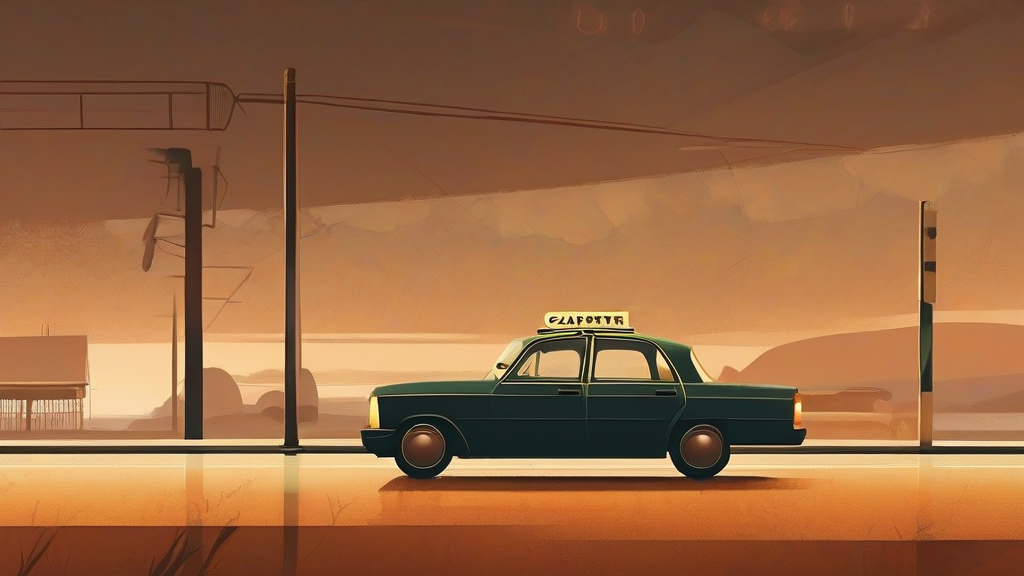
What does carfare mean?
Carfare is an American English noun meaning the fare — the required payment — for riding a public conveyance such as a bus, streetcar, trolley, or taxi. Formed as a straightforward compound of "car" and "fare," it entered everyday use in the nineteenth century, when urban transit systems charged riders a small per-trip fee. The word carries a strongly period flavor today: it conjures images of commuters clutching nickels and dimes for the trolley, which is why it often appears in historical fiction and reminiscence. Although largely displaced in modern speech by terms like "bus fare" or "cab fare," carfare remains fully understood and occasionally appears when speakers want a touch of nostalgia or informality. Beyond its literal sense, it can refer to the modest sum of money someone is given expressly to cover their travel — as in handing a child carfare to visit a relative — making it a compact, evocative term for the small cost of getting around town.
nounThe fare charged for a ride on a bus, streetcar, taxi, or other public conveyance; the money needed to pay for such transportation.
- The fare or fee paid for a ride on a public conveyance such as a bus, streetcar, tram, or taxi.
- By extension, the money set aside or given to someone specifically to cover local transportation costs.
"She counted out the exact change for her carfare before boarding the streetcar."
"He gave his son enough carfare to get downtown and back by bus."
"In those days, five cents was all the carfare you needed to ride the trolley across town."
The plural is rare because the word usually denotes an amount of money rather than countable items; use it mainly when referring to fares for multiple distinct trips.
"The company reimbursed employees' carfares for their daily commutes."
Before subway tokens and transit cards, 'carfare' was the word Americans reached for every time they hopped on a streetcar — and it still carries a nostalgic whiff of early-20th-century city life.
Reviewed by Deb Chak, Editor. AI-assisted content curated by RJS Tech Solutions LLP.
Etymology of carfare
Carfare is a compound of two English words: "car," from Latin "carrus" via Anglo-Norman and Old North French, and "fare," from Old English "faran," meaning to travel or journey, whose noun sense evolved to mean payment for transport. The compound arose in American English during the nineteenth century as horse-drawn streetcars gave way to electrified trolleys and urban commuting became routine. It shares its second element with other travel-related compounds such as "airfare" and older formations like "wayfarer" and "welfare."
How carfare is actually used
"Carfare" is chiefly American and has a distinctly dated or old-fashioned flavor today, evoking the era of nickel streetcars in the late nineteenth and early twentieth centuries. It is still understood, but modern speakers more often say "bus fare," "cab fare," or simply "fare." The word can also appear in figurative or idiomatic contexts, such as being told one does not have "enough carfare" to accomplish something, though this usage is rare.
Easily confused with carfare
Airfare is the price of a flight on an airplane, while carfare refers to the cost of a ride on a bus, streetcar, taxi, or similar ground transportation.