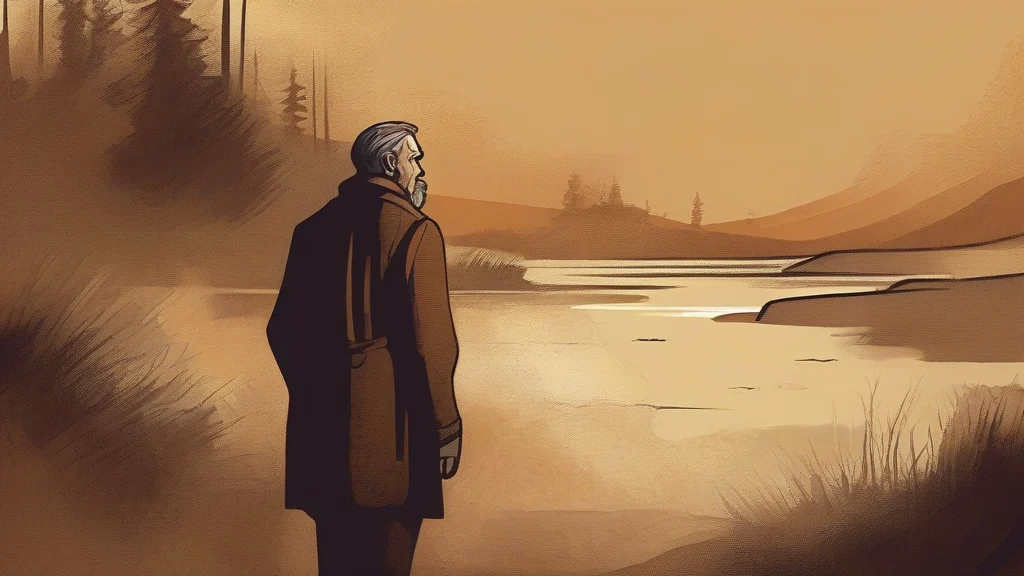
What does carle mean?
Carle is an archaic English word for a man, most often an elderly, rustic, or common one, that survives today chiefly in Scottish and Northern English speech and in older literature. Derived from Old Norse karl, meaning 'man' or 'free peasant,' it is a close cousin of the Old English word ceorl, which gave modern English 'churl.' While churl turned into a term of contempt, carle retained its plain sense of 'fellow' or 'old man,' though it too could take a pejorative shade when applied to a mean or ill-tempered person, as in phrases like 'ill carle.' Writers such as Robert Burns used it freely, and it lends any sentence a distinctly northern, folksy flavor. Though rare in modern use, carle remains useful to readers of Scots poetry and historical fiction, and it offers a vivid example of how two words from the same Germanic root can drift into very different emotional territory over the centuries.
nounA man or male person; especially an older, common, or rustic man. In Scottish and Northern English usage it can carry a mildly pejorative sense of a churlish or mean-spirited old man.
- An old or elderly man (chiefly Scottish and Northern English).
- A man or fellow generally; sometimes a rustic, low-born, or churlish man.
"The old carle sat by the fire, mending his nets as he had done for fifty years."
"The canny old carle knew every track on the hill better than any map."
"'Away with you, ye ill-natured carle,' she said, half laughing."
Standard plural; used mainly in Scots and dialectal contexts.
"The auld carles gathered at the kirk door to gossip after the service."
Carle and 'churl' are twin brothers from the same ancient Germanic root — one stayed home in England and became an insult, while its Norse sibling sailed across the sea and simply meant 'man.'
Reviewed by Deb Chak, Editor. AI-assisted content curated by RJS Tech Solutions LLP.
Etymology of carle
Carle comes from Old Norse karl, meaning 'man, freeman, or peasant,' brought to Britain during the Viking Age and absorbed especially into Northern English and Scots. It shares a common Proto-Germanic ancestor (*karlaz) with Old English ceorl, the source of modern 'churl,' making the two words etymological siblings that took different paths. The word has been current in Scottish and Northern dialect since Middle English times and remains recognizable through the works of Burns and Scott.
How carle is actually used
Archaic and literary today, surviving mainly in Scots and Northern English dialect and in older literature such as Burns and Scott. It is neutral to affectionate when meaning simply 'an old man,' but can be mildly derogatory ('an ill carle') implying meanness or bad temper. Do not confuse register: using it in modern conversation will sound deliberately quaint or dialectal.
Easily confused with carle
Churl comes from the Old English cognate of carle and now means a rude or miserly person, whereas carle is the Norse-derived form meaning simply a man, especially an old or rustic one.
Carol is a festive song, unrelated to carle despite the similar spelling.