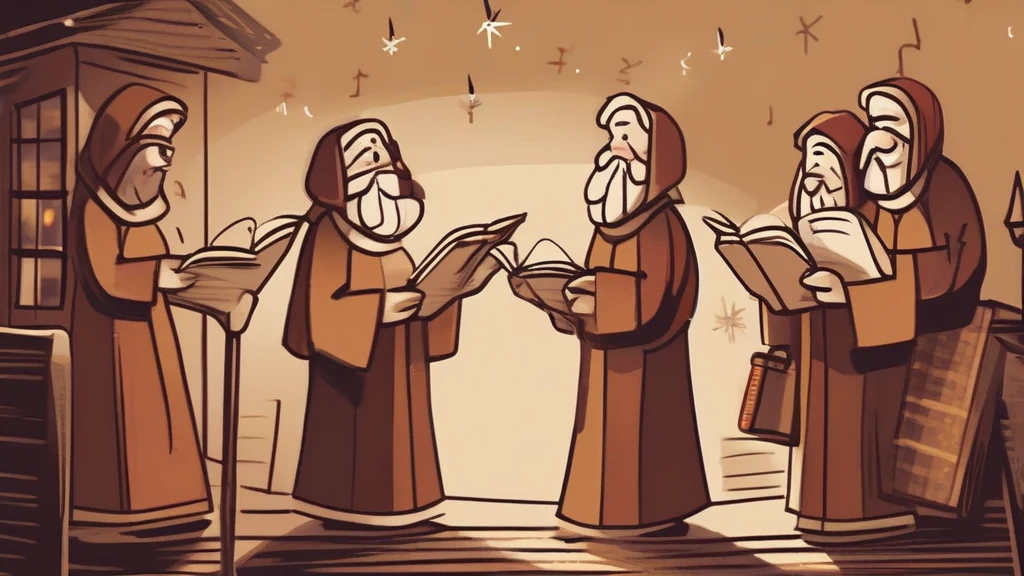
What does caroling mean?
Caroling is the act of singing carols — joyful songs of celebration, most often Christian ones associated with Christmas. In its most familiar modern form, caroling involves groups of singers going from house to house or performing in public spaces such as streets, town squares, and shopping districts during the holiday season, sometimes collecting money for charity. The word can also refer more generally to festive communal singing at any time of year. Derived from the verb "to carol," which traces back through Old French to a root shared with "chorus" and "choir," caroling carries distinctly warm, nostalgic, and communal connotations; it evokes candlelit processions, winter evenings, and traditions passed down through generations. In American English it is spelled with one L, while British English doubles the consonant as "carolling." Whether describing a church choir's performance or neighbors serenading their street, caroling remains one of the most recognizable seasonal traditions in English-speaking countries.
The activity of singing carols, particularly in public or from house to house during the Christmas season.
"Carolers' voices filled the frosty air as they moved along the lane, their caroling audible from blocks away."
Usually uncountable; used chiefly in the context of Christmas traditions.
Present participle of "carol": to sing carols, especially in a festive group setting.
"They were caroling outside the cathedral when the snow began to fall."
"Caroling" is an uncountable noun referring to the activity itself and does not take a plural form; individual songs are referred to as "carols."
"The carols they sang were older than anyone in the room."
When carolers went door to door in medieval times, they weren't just spreading cheer — the word 'carol' originally meant a ring dance accompanied by singing.
Reviewed by Deb Chak, Editor. AI-assisted content curated by RJS Tech Solutions LLP.
Etymology of caroling
Caroling comes from the verb "carol," which entered Middle English from Old French "caroler," derived from "carole" — a circle dance accompanied by song. The French word ultimately traces back to Late Latin "choraula" and Greek roots related to "choros" (dance, chorus), making it a cousin of words like "chorus," "choir," and "chorale." Over time the meaning narrowed from dancing and singing generally to the singing of festive songs, becoming firmly tied to Christmas music by the late medieval period.
Related word forms
How caroling is actually used
"Caroling" (US) is spelled "carolling" with a double L in British English. As a noun it is an uncountable gerund referring to the activity rather than individual songs. The term carries warm, festive connotations and is strongly associated with the Christmas season in both American and British usage.
Easily confused with caroling
A carillon is a set of tuned bells played from a keyboard, whereas caroling refers to people singing carols.