What does carousal mean?
A carousal is a spell of loud, drunken festivity — a night of heavy drinking, singing, and general revelry. The word functions as a noun and carries a slightly literary, old-fashioned flavor, so it appears more often in novels and journalism than in casual conversation, where terms like 'binge' or 'bender' dominate. Its tone is typically wry or mildly disapproving, evoking images of taverns, soldiers on leave, or celebrations that have gotten out of hand. Speakers should be careful not to confuse it with 'carousel', the fairground ride; despite their visual similarity, one spins children around while the other spins revelers into the small hours. Related to the verb 'carouse', meaning to drink lavishly and noisily, it remains a vivid choice for describing exuberant, alcohol-fueled celebration with a touch of historical color.
nounA bout of noisy, drunken merrymaking; a lively drinking party or revel.
- Noisy, drunken festivity or revelry.
- (Less commonly) any riotous, boisterous celebration.
"The wedding festivities ended in a wild carousal that lasted until dawn."
"The sailors' carousal kept the whole tavern awake until sunrise."
"After months of austerity, the team allowed itself one evening of unashamed carousal."
Regular plural; commonly used when referring to repeated episodes of revelry over time.
"The diaries recount the prince's frequent carousals in the capital's taverns."
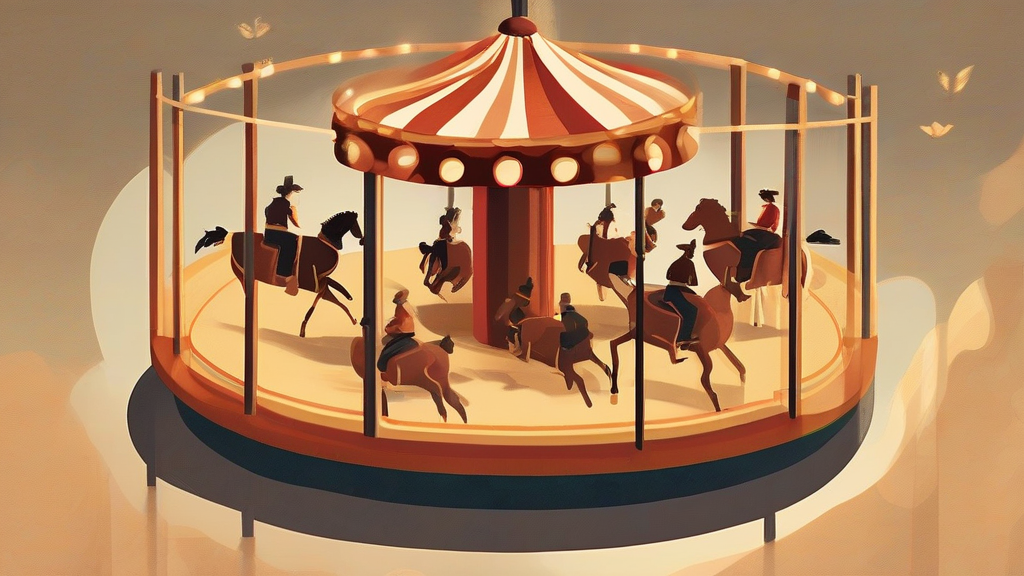
Despite its resemblance to the fairground carousel, a carousal involves no horses on poles — just people raising glasses well past midnight.
Reviewed by Deb Chak, Editor. AI-assisted content curated by RJS Tech Solutions LLP.
Etymology of carousal
The noun carousal derives from the verb carouse, which entered English in the mid-16th century from French 'carouser'. The French term traces back to German 'gar aus' ('quite out'), a phrase used in drinking toasts to signal draining the cup completely — 'gar aus trinken' meant to drink fully down. The noun form carousal appeared in English by the early 17th century, retaining this sense of hearty, cup-draining celebration.
Related word forms
How carousal is actually used
Somewhat literary or old-fashioned in register; modern speech more often uses 'binge', 'bender', or 'night out'. The connotation is usually mildly disapproving or wry rather than neutral.
Easily confused with carousal
A carousel is a rotating merry-go-round or baggage conveyor, while a carousal is a drunken celebration or revel.