
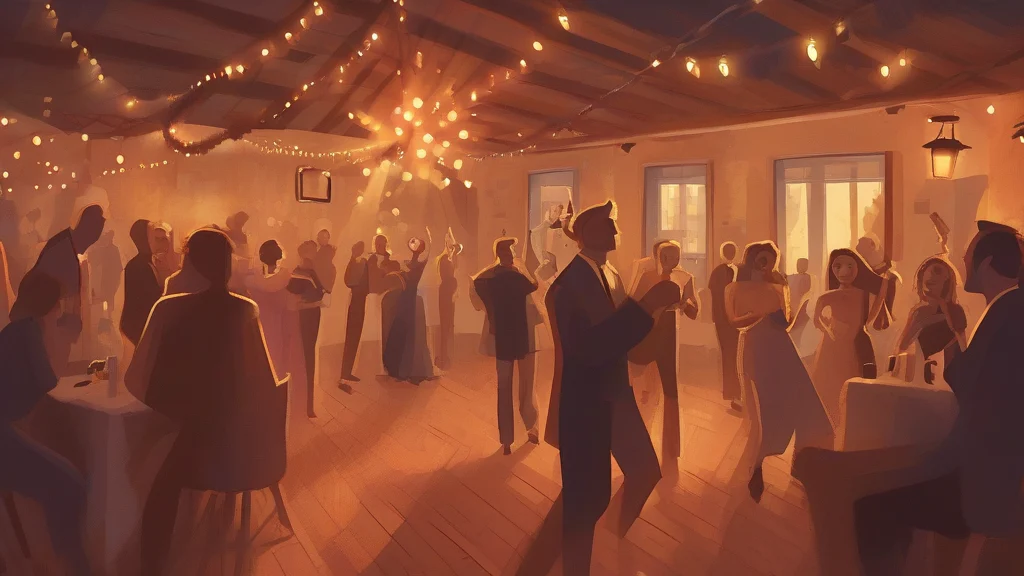
What does revelry mean?
Revelry is a formal and slightly literary word for joyful celebration, especially loud, energetic merrymaking involving dancing, drinking, or other festivities. It can refer both to an event or period of celebration and to the general atmosphere of exuberant revelry. In ordinary positive use, it suggests communal happiness and abandon, as in a festival or wedding characterized by singing, dancing, and laughter. However, the word can also be used critically, implying that celebration has become excessive, unruly, or socially indulgent. Its elevated tone makes it especially suitable for literary descriptions, historical accounts, and dramatic narration. Compared with the more neutral “celebration,” “revelry” emphasizes intensity and merriment; compared with “reverie,” it has the opposite meaning, since revelry is outward and social rather than inward and dreamy.
nounJoyous celebration, especially one marked by noisy or enthusiastic festivities. It can also refer to the atmosphere of wild merriment and revelry.
- Joyous, noisy celebration or merrymaking.
"The streets filled with revelry as the festival continued into the night."
"The wedding ended with dancing, laughter, and all-night revelry."
"His account of the political revelry contrasted sharply with the country's broader divisions."
Usually used when referring to separate episodes or occasions of celebration.
"The town's festival is remembered for its wild, all-night revelries."
Revelry is the word for the moment when celebration becomes so exuberant that it feels like the world has briefly been turned upside down.
Reviewed by Deb Chak, Editor. AI-assisted content curated by RJS Tech Solutions LLP.
Where does revelry come from?
Revelry developed in late Middle English from “revel,” meaning to feast or make merry, with the suffix “-ry” indicating an activity or state. “Revel” itself comes through Anglo-French from Old French reveler, a word associated with rejoicing and celebration, ultimately connected with Latin rebellare, “to make a noise or raise an uproar.” The English noun therefore carries the sense of noisy, exuberant merrymaking.
How revelry is actually used
Generally literary or celebratory in tone. It can describe genuinely festive gatherings, but may also carry a slightly ironic or critical tone when referring to excessive indulgence, disorder, or conspicuous celebration.
Easily confused with revelry
Revelry means lively, noisy celebration, whereas reverie means a dreamy, meditative state.