What does carousing mean?
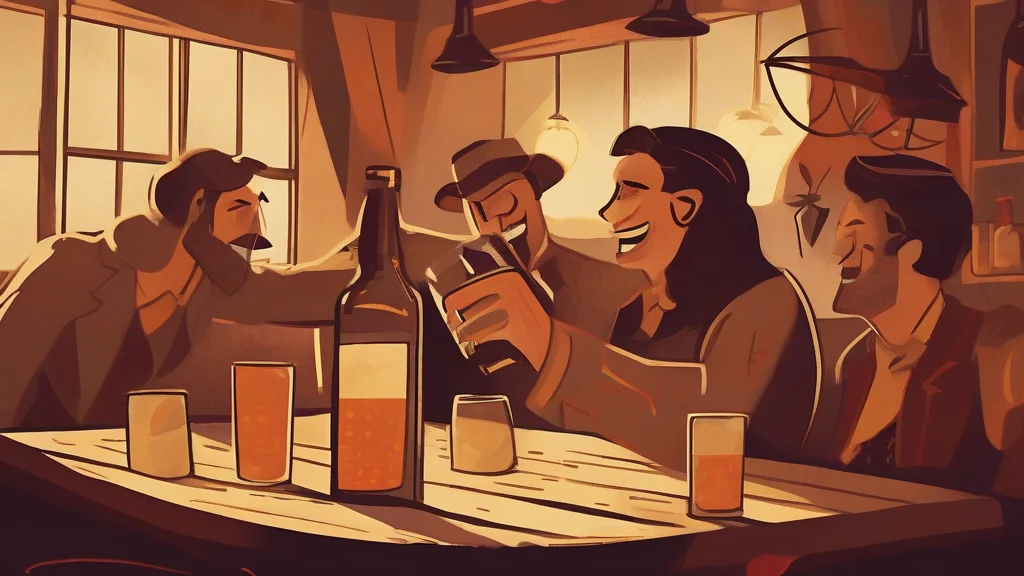
Carousing describes festive, boisterous, and often prolonged drinking — the kind of loud, convivial revelry associated with taverns, feasts, and celebrations that run late into the night. It functions chiefly as the present participle and gerund of the verb "carouse," though it can also serve as a noun for such a revel itself. The word has a literary, somewhat archaic coloring: it evokes Falstaffian excess and historical scenes of sailors on shore leave or students on a spree far more readily than modern nightlife, where "partying" would be the natural choice. Its connotations are mixed — it can suggest harmless high spirits and warm camaraderie, or hint at wasteful, self-indulgent excess, so tone depends heavily on context. Etymologically colorful, it descends from a German drinking toast urging drinkers to finish their cups entirely, which makes the word a small piece of social history in its own right. Writers reach for it precisely because it condenses noise, drink, company, and duration into a single vivid image.
Present participle of "carouse": to drink alcohol heavily and noisily while engaging in lively celebration.
"They spent the whole night carousing after the harvest festival."
Almost always plural or collective subjects; the activity is inherently communal.
A session or episode of noisy, festive drinking; a revel.
"The innkeeper had grown weary of their nightly carousing."
Less common than the verbal use; often preceded by an adjective such as 'endless' or 'youthful'.
The word traces back to a German drinking toast, "gar aus!" — literally "quite out!" — meaning to drain your glass completely.
Reviewed by Deb Chak, Editor. AI-assisted content curated by RJS Tech Solutions LLP.
Etymology of carousing
Carousing comes from the verb "carouse," which entered English in the mid-sixteenth century from French "carous" (a drinking bout), borrowed from Middle High German "gar aus," a toast literally meaning "quite out" or "all gone" — i.e., drain the cup completely. The word quickly became associated with hearty, communal drinking in Elizabethan literature. Related forms include the noun "carousal" and the agent noun "carouser."
Related word forms
How carousing is actually used
Carousing carries a distinctly literary, slightly old-fashioned flavor compared to plain 'partying'. It usually implies sustained, rowdy, communal drinking rather than a single evening out, and often hints at mild disapproval or affectionate nostalgia depending on context. The noun form is less common than the verb.