
What does wassailing mean?
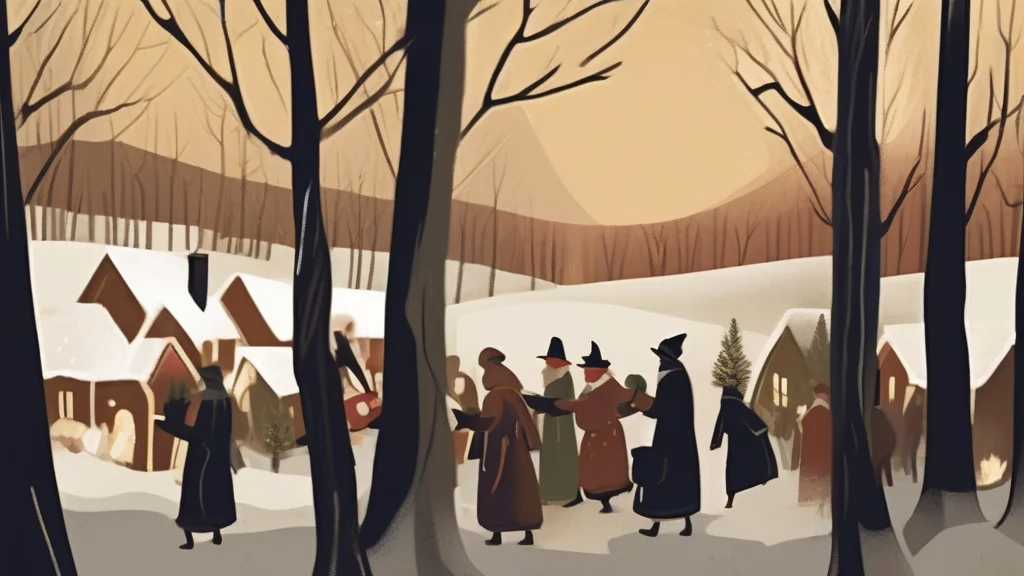
Wassailing is an English word associated above all with Christmas. In its best-known traditional sense, it means visiting houses from door to door, singing carols or other festive songs, and often receiving food, drink, or small gifts. The practice is especially associated with English communities and is often portrayed as a cheerful survival from an earlier rural Christmas custom. The word can also describe celebrating or carousing more generally, though this older sense now sounds literary or archaic. As a noun, wassailing can denote the Christmas tradition itself or the act of making merry. Its name preserves an old wish for health: the word developed from an Old English expression meaning “be whole!” Modern Christmas wassailing combines that inherited sense of good wishes with communal singing, hospitality, and seasonal festivity. It is therefore useful as both a precise name for a particular tradition and a vivid word for exuberant celebration.
To visit houses at Christmas, singing and often receiving food or drink; more generally, to make merry or celebrate boisterously.
"They went wassailing through the village until midnight."
The Christmas sense is traditional and regional; the broader celebratory sense is literary or archaic in modern English.
The custom of visiting houses at Christmas to sing and receive refreshments; also, the act of festive celebration or carousing.
"The village wassailing drew visitors from neighboring communities."
The noun is uncommon in ordinary modern usage but is standard when referring to the traditional seasonal activity.
The plural is grammatically standard but uncommon; it is chiefly possible when referring to separate traditional activities.
"Annual wassailings are still held in a few English communities."
At Christmas, wassailing once meant singing your way from door to door—and being rewarded for the chorus.
Reviewed by Deb Chak, Editor. AI-assisted content curated by RJS Tech Solutions LLP.
Where does wassailing come from?
Wassail comes through Middle English from Old English wæs sǣl, literally “be whole!” The expression functioned as a wish for health and later came to denote a toast, merry-making, or drinking in celebration. Its modern association with visiting houses and singing at Christmas developed through English seasonal customs, producing the distinctive activity now called wassailing.
Related word forms
How wassailing is actually used
The word has a literary and traditional register rather than being common in everyday conversation. In modern usage it is especially associated with seasonal house-to-house singing, while its older sense of boisterous celebration survives mainly in formal or evocative writing.
Easily confused with wassailing
Wailing means crying loudly, whereas wassailing refers to festive celebration or traditional Christmas singing.