
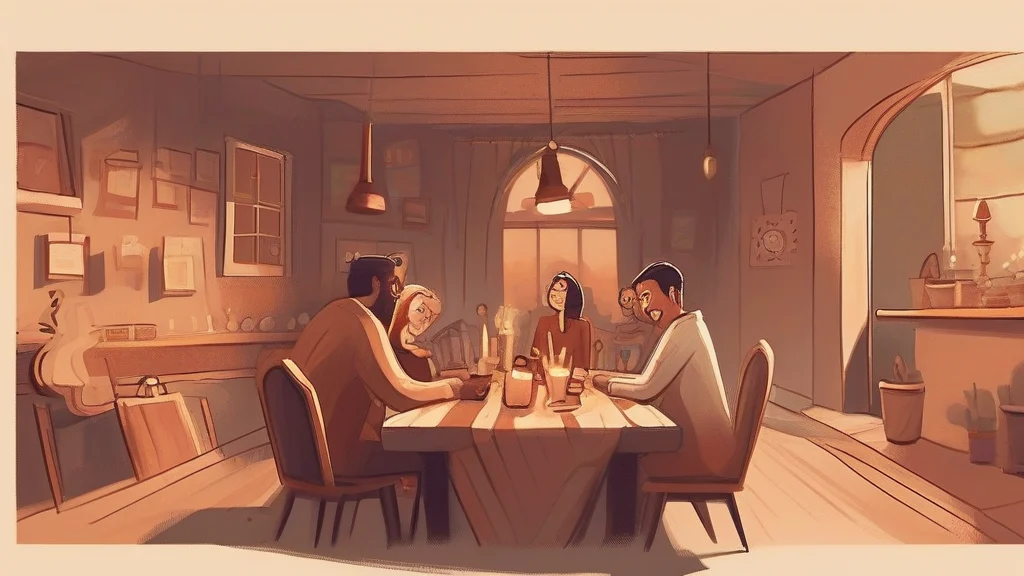
What does merrymaking mean?
Merrymaking denotes the lively, festive enjoyment associated with parties, holidays, weddings, fairs, and other communal gatherings. It encompasses not only amusement and laughter but also the music, food, games, dancing, and social interaction that make an occasion celebratory. The word often has a traditional and welcoming connotation, evoking communal festivities such as Christmas celebrations or village gatherings, though it can refer equally to modern parties and public events. As an adjective, it describes people, crowds, songs, or settings associated with cheerful celebration. The term is especially useful when the emphasis is on an event or atmosphere of festivity rather than on amusement alone; for that broader emotional sense, 'merriment' is often more precise.
The activity of celebrating, entertaining, and enjoying oneself at a festive or social occasion.
"The streets were alive with music and merrymaking throughout the evening."
Often used as a mass noun for general festivity, though 'merrymakings' can refer to individual festive events.
Associated with cheerful celebration or festive enjoyment.
"The village was decorated with lanterns and a merrymaking crowd filled the square."
This attributive use is less common than the noun and typically appears immediately before a noun.
Usually used in the plural when referring to separate festive events or gatherings, as in 'the village's annual merrymakings.'
"The fair included several merrymakings for children and adults."
From Christmas parties to village fairs, merrymaking turns ordinary gatherings into shared celebrations of food, music, laughter, and community.
Reviewed by Deb Chak, Editor. AI-assisted content curated by RJS Tech Solutions LLP.
Where does merrymaking come from?
The word is formed within the Middle English period from 'merry' and the deverbal noun 'making.' 'Merry' itself descends through Middle English from Old English terms associated with mirth and pleasantness, while 'making' comes from the Germanic 'makōn,' meaning to fashion or produce. The compound therefore originally conveyed the activity of being merry or creating a cheerful atmosphere before becoming firmly associated with festive social gatherings.
Related word forms
How merrymaking is actually used
The noun is most natural in contexts involving parties, holidays, weddings, and communal celebrations. It often carries a warm, traditional, or nostalgic tone, especially when used with words such as Christmas or village. The attributive use is less common but occurs in phrases such as 'merrymaking crowds' and 'merrymaking songs.'
Easily confused with merrymaking
Merriment refers more broadly to cheerfulness or amusement, whereas merrymaking usually emphasizes the social activities and festivities through which that cheer is expressed.