What does cartway mean?
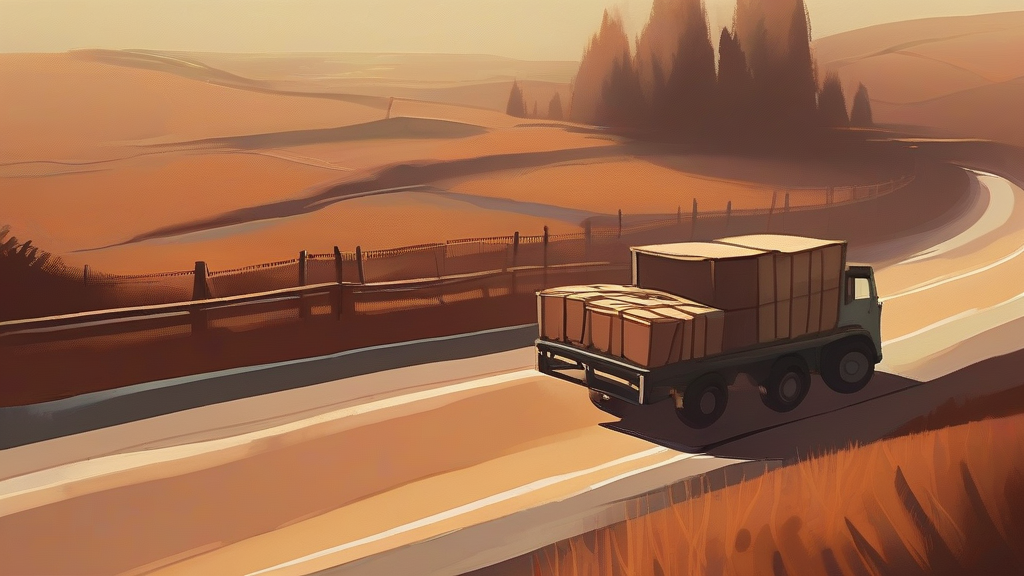
Cartway is a compound noun formed from 'cart' and 'way', denoting a road, lane, or track intended for use by carts — that is, horse-drawn two- or four-wheeled vehicles carrying goods. Historically widespread across Britain and North America, cartways were typically unpaved, often muddy tracks linking farms, mills, quarries, and villages to main roads. In mining and quarrying contexts the term took on a more specialized sense, referring to the passages along which wheeled coal tubs or ore wagons were hauled, whether underground or on the surface of a works. Today the word survives mainly in historical accounts of rural transport, in regional and dialectal usage, and in place names such as 'Cartway Lane'. Its connotations are rustic and antiquarian, evoking pre-industrial landscapes shaped by generations of wheel traffic. Though largely superseded by terms like 'track' or 'lane' in ordinary speech, it remains useful when precision about historic routes matters.
A road, lane, or track made or used by carts; a cartroad.
"The parish records describe the disputed strip as a common cartway leading to the corn mill."
(Mining and quarrying) a passage or track along which wheeled tubs or wagons are hauled.
"Each cartway in the colliery was laid with wooden rails to ease the passage of the coal tubs."
Standard pluralization; used when referring to multiple cart tracks or haulage passages.
"Sunken cartways crisscrossed the downs long before the turnpike roads arrived."
Long before tarmac and highways, the cartway was the workhorse of rural transport — many modern country lanes began life as sunken cartways hollowed out by centuries of iron-rimmed wheels.
Reviewed by Deb Chak, Editor. AI-assisted content curated by RJS Tech Solutions LLP.
Etymology of cartway
Cartway is a straightforward English compound of 'cart', from Old Norse 'kartr' (itself likely borrowed from Old English), and 'way', from Old English 'weg', meaning a road or path. The word arose naturally in medieval and early modern England, where it distinguished cart-worthy routes from mere footpaths — indeed, the distinction between a footway and a cartway carried real legal weight in rights-of-way disputes. It later passed into mining vocabulary, where cartways were the rails or passages along which loaded wagons were drawn.
Related word forms
How cartway is actually used
An older and chiefly dialectal or technical term; rare in everyday modern speech except in local place names, historical writing about rural roads, and mining terminology.
Easily confused with cartway
A causeway is an elevated road or path across wet or low ground, whereas a cartway is simply any track or lane used by carts.