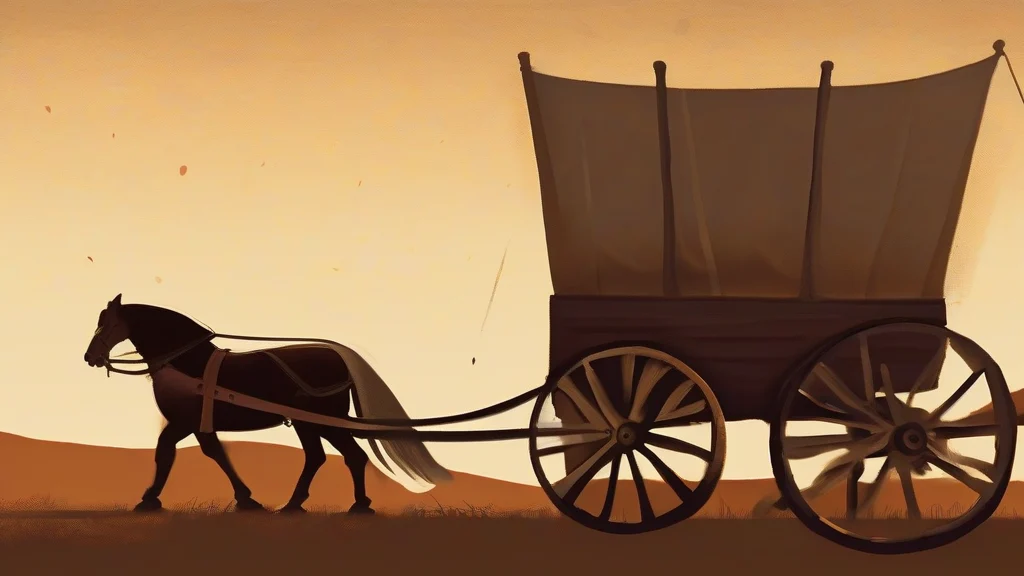
What does cartwright mean?
A cartwright is a craftsman who designs and builds carts, wagons, and other horse-drawn vehicles, typically working in wood and iron from a small workshop. The term combines "cart" with "wright," an Old English word meaning a skilled maker or builder — the same element found in wheelwright, shipwright, and playwright. Before mass production, virtually every town and farming district depended on its local cartwright, since carts were essential to agriculture, trade, and transport. The occupation declined sharply with the arrival of railways, motor vehicles, and factory-built carriages in the nineteenth and twentieth centuries, so today the word is mainly encountered in historical writing or as an English surname borne by families whose ancestors practised the trade. Notable bearers include Edmund Cartwright, the eighteenth-century clergyman who invented the power loom. The word evokes a pre-industrial world of hand tools, timber, and rural self-sufficiency.
A person whose occupation is making and repairing carts and wagons.
"The cartwright bent fresh ash timbers for the new farm wagon."
An English occupational surname for a maker of carts.
"Mr Cartwright has been the school's head teacher for a decade."
Regular plural; used when referring to multiple practitioners of the trade or multiple bearers of the surname.
"By the 1850s, most country cartwrights had begun supplementing their income with general carpentry."
Every playwright owes their name to the same Old English root as the cartwright — a 'wright' was simply a skilled maker, whether of dramas or of wagons.
Reviewed by Deb Chak, Editor. AI-assisted content curated by RJS Tech Solutions LLP.
Etymology of cartwright
The word "cartwright" is formed from Middle English "cart" (from Old Norse "kartr") combined with "wright," from Old English "wryhta" or "wyhta," meaning a worker or maker. It arose as an occupational term during the Middle Ages, when surnames derived from trades became hereditary. It shares its second element with other compound occupational terms such as wheelwright, shipwright, and wainwright, all denoting makers of specific vehicles or vessels.
How cartwright is actually used
"Cartwright" is now chiefly historical or antiquarian, since the industrial manufacture of vehicles replaced the independent craft. It survives commonly as a surname (e.g., Edmund Cartwright, inventor of the power loom). The word carries a rustic, pre-industrial connotation.
Easily confused with cartwright
A cartwright builds carts and wagons, while a cartographer draws maps — despite the similar 'cart-' spelling.
A wheelwright specializes specifically in making wheels, whereas a cartwright makes whole carts and wagons, though their trades overlapped closely.