What does carvel mean?
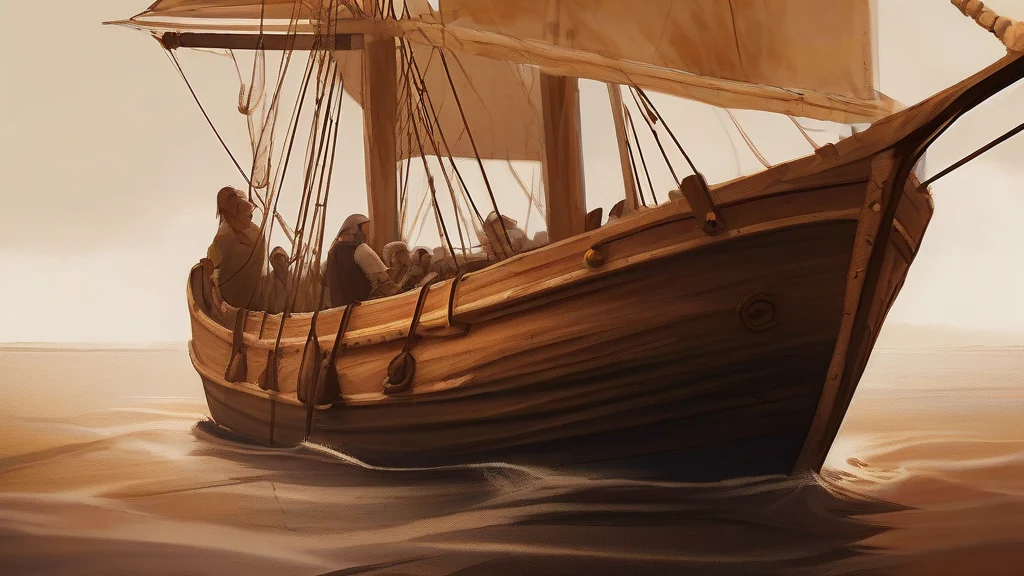
A carvel is a small, nimble sailing vessel best known through its more common spelling, "caravel" — the light, lateen-rigged ships that Portuguese navigators relied on during the great age of maritime exploration in the fifteenth and sixteenth centuries. Compact, seaworthy, and maneuverable, such vessels made long coastal voyages possible and became emblematic of early European expansion. Beyond naming a ship type, "carvel" also lives on in nautical terminology through "carvel-built", describing a hull whose planks are fitted flush edge to edge over a frame rather than overlapping as in clinker construction, yielding the smooth sides prized for speed and later for painting and repair. Today the word appears almost exclusively in maritime history, boatbuilding, and heritage contexts, carrying connotations of craftsmanship and the dawn of oceanic exploration rather than any everyday usage.
A small, light, often lateen-rigged sailing ship used especially by Portuguese explorers in the fifteenth and sixteenth centuries; a variant of "caravel".
"Down the Tagus sailed a fleet of carvels bound for the unknown Atlantic."
Modern writers usually prefer the spelling "caravel" for this sense.
(In "carvel-built") a method of constructing a boat's hull with planks laid flush, edge to edge, over a framework rather than overlapping.
"The dinghy is carvel-built, giving it a sleek, easily painted bottom."
Almost always encountered as the compound adjective "carvel-built" or in "carvel planking/building".
Regular plural; used when referring to multiple ships of this type.
"Two carvels anchored off the harbor while their crews went ashore."
Ships like the carvel-carved caravels carried Columbus across the Atlantic — yet most people have never heard the word.
Reviewed by Deb Chak, Editor. AI-assisted content curated by RJS Tech Solutions LLP.
Etymology of carvel
The word entered English in the sixteenth century from French caravelle, which traces back through Spanish carabela and Portuguese caravela, ultimately deriving from the Greek karabos, meaning a small ship or horned beetle. It was originally applied to the swift, lateen-rigged vessels Portugal developed for Atlantic exploration, and the spelling "carvel" was long interchangeable with "caravel". Over time "caravel" became the dominant form for the ship itself, while "carvel" persisted chiefly in the boatbuilding term "carvel-built", referring to flush-laid planking.
Related word forms
How carvel is actually used
In contemporary English the spelling "caravel" is far more common for the ship; "carvel" survives mainly in nautical contexts, particularly in the compound "carvel-built", which describes flush-planked hulls. The word has a historical, technical register rather than everyday use.
Easily confused with carvel
"Caravel" is the standard modern spelling for the small Portuguese exploration ship, while "carvel" is an older variant of that word and now more often refers to flush-laid plank construction.
Clinker (lapstrake) construction overlaps planks along the hull, whereas carvel construction lays them edge to edge flush, producing a smooth surface.