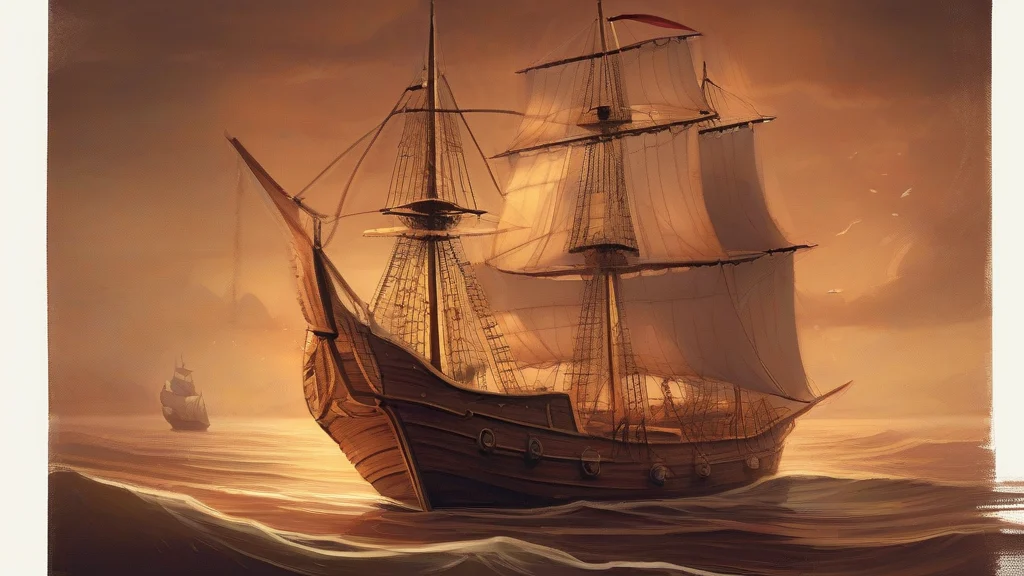
What does caravel mean?
A caravel is a small, agile sailing ship that rose to prominence in fifteenth- and sixteenth-century Europe, particularly in Portugal and Spain. Typically built with a shallow draft and fitted with lateen sails—triangular sails set on long yards—or a mix of lateen and square rigging, the caravel could sail closer to the wind than many heavier vessels of its time. This combination of speed, maneuverability, and seaworthiness made it the favored craft of explorers pushing along the west African coast and out into the open Atlantic. The word is now largely historical, appearing in discussions of the Age of Discovery, museum exhibits, and historical fiction. Its most famous appearances in popular memory are as the Niña and Pinta of Columbus's 1492 fleet. For readers of history, caravel evokes an era when modest wooden ships undertook journeys that redrew the map of the world.
nounA small, swift sailing ship of the 15th and 16th centuries, developed by the Portuguese and used extensively for exploration, typically rigged with lateen or a combination of lateen and square sails.
- A small, fast sailing ship of the 15th–16th centuries used by Portuguese and Spanish explorers.
- (Extended/rare) Any similar light, lateen-rigged vessel; also used figuratively for something resembling such a ship.
"Columbus's fleet included the caravels Niña and Pinta alongside the larger Santa María."
"The caravel's lateen sails allowed it to tack closer to the wind than most ships of its day."
"In his novel, the explorer watches the coastline of West Africa slide past from the deck of a battered caravel."
Standard regular plural; used when referring to fleets or multiple ships of this type.
"A squadron of caravels departed Lagos in search of a sea route to India."
The caravel was the little ship that shrank the world: nimble enough to sail into the wind, it carried Portuguese explorers down the African coast and Columbus across the Atlantic.
Reviewed by Deb Chak, Editor. AI-assisted content curated by RJS Tech Solutions LLP.
Etymology of caravel
Caravel entered English via French caravelle, borrowed from Portuguese caravela, the name of the distinctive exploring ship perfected by Portuguese shipwrights in the fifteenth century. The Portuguese term is usually traced to Latin carabus, meaning a small wicker-covered boat, though the exact path through earlier Romance forms is debated. The related French word caravelle survives as the name of a jet airliner, and caravan reflects the same Mediterranean root family.
How caravel is actually used
Caravel is primarily a historical term, encountered in writing about the Age of Exploration, maritime history, museums, and historical fiction rather than in everyday speech.
Easily confused with caravel
A carrack was a larger, bulkier merchant ship of the same era used for cargo and long voyages, whereas the caravel was smaller, lighter, and prized for its speed and maneuverability.