What does cassette mean?
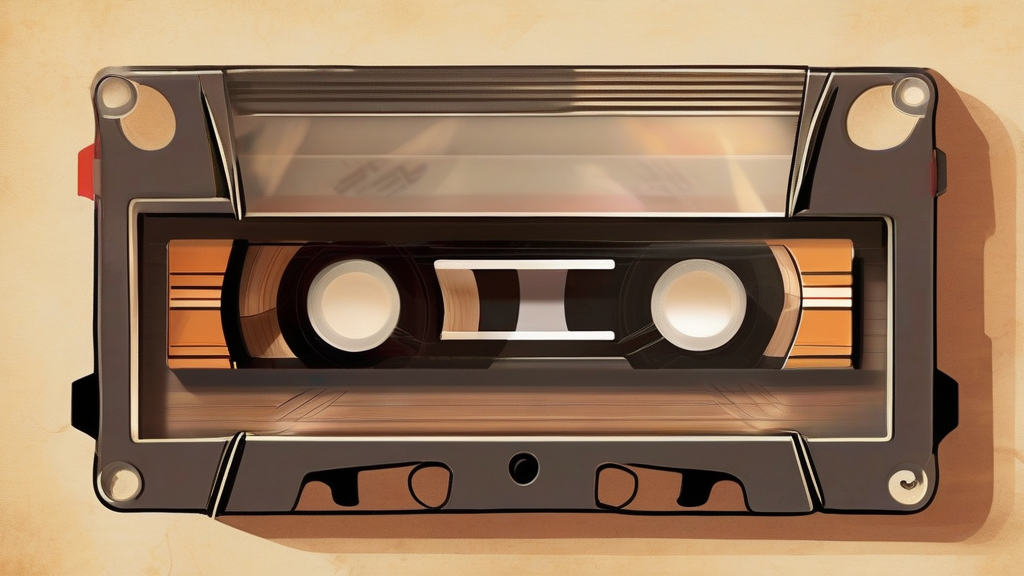
A cassette is a small, flat, enclosed case — most familiarly a plastic shell holding two spools of magnetic tape that could be played back on a matching recorder or player. Introduced commercially in the early 1960s by Philips, the compact audio cassette revolutionised how people listened to music: it was portable, affordable, recordable at home, and became the dominant personal music format through much of the 1970s, 1980s, and early 1990s before CDs and digital files displaced it. Beyond audio, the word applies to similar encased media such as video cassettes and photographic film cartridges, and more broadly to any small removable container or unit within a machine. Today 'cassette' carries a strong retro connotation, evoking mixtapes, rewinding with a pencil, and the tactile rituals of analog media. Derived from the French word for a little box, it is used mainly as a noun in both British and American English.
A small, flat, sealed plastic case containing magnetic tape wound on two spools, used for recording and playing back sound or, historically, moving images.
"They found a shoebox full of labelled cassettes in the attic."
When unqualified, usually understood as an audio cassette.
A small removable case or cartridge holding something, such as photographic film, slides, or a component in a piece of equipment.
"Insert the toner cassette into the printer until it clicks into place."
Standard regular plural; used identically in British and American English.
"The library still lends out audiobooks on cassettes."
The word 'cassette' comes from the French for a little box — which is exactly why the compact audio format that dominated music from the 1970s to the 1990s took its name.
Reviewed by Deb Chak, Editor. AI-assisted content curated by RJS Tech Solutions LLP.
Etymology of cassette
Cassette entered English in the late 18th century from French, where it is the diminutive of casse ('box' or 'case'), itself ultimately from Latin capsa, meaning a container or receptacle. English words sharing this Latin root include case, cash (originally a money box), and chase (in the sense of an enclosure or frame). Its application to recorded media arose in the 20th century, becoming firmly established with Philips's compact audio cassette introduced in the early 1960s.
How cassette is actually used
In modern usage, 'cassette' almost always refers to audio tape unless qualified otherwise (e.g. video cassette). The word has a nostalgic connotation today, as digital formats have largely replaced physical tape media. In British English it remains in common speech when discussing older technology.
Easily confused with cassette
A casket is a small chest, most often a coffin; a cassette is a sealed case of recording tape or a small container.