
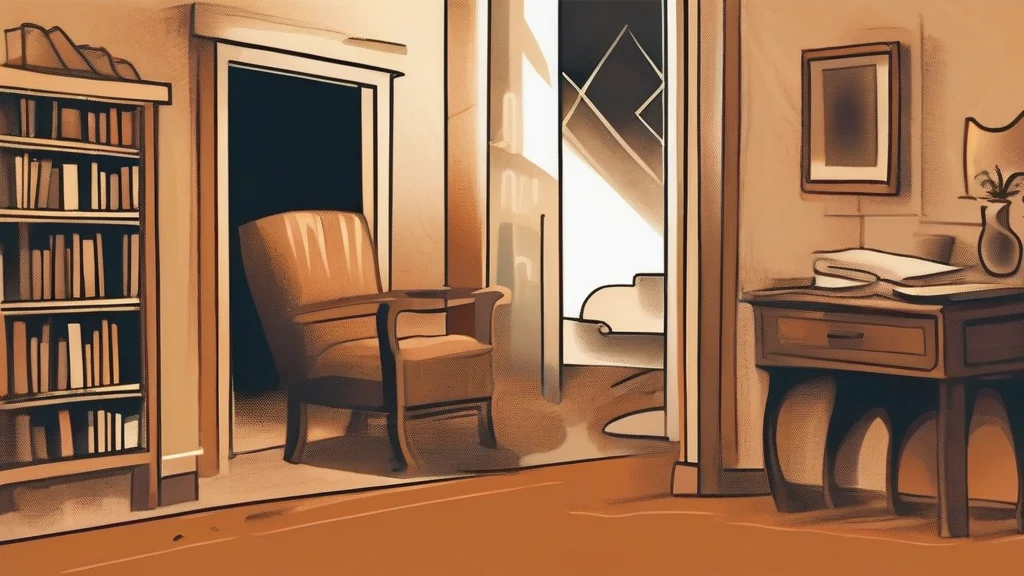
What does vignette mean?
A vignette is a small illustration or a brief, evocative description that captures a person, place, incident, or scene. In writing, a vignette may function as a self-contained episode, presenting a momentary impression rather than developing a complete argument or extended narrative. In visual art and design, the term can refer to a small picture, especially one that blends into its surroundings or decorates a page. The word also occurs in broader artistic contexts for a compact, carefully composed representation of part of a larger subject. Although commonly encountered in literary criticism, art history, design, and photography, “vignette” is not restricted to any one region. Its usefulness lies in suggesting that a small, sharply observed detail can convey the character or atmosphere of something larger. The verb “to vignette” is comparatively uncommon but means to depict something briefly and suggestively.
A small illustration or a brief, evocative description of a person, place, incident, or scene.
"The author included a memorable vignette of the school playground."
The literary sense often denotes a short, self-contained scene or impression rather than a complete narrative.
To portray or describe something briefly and suggestively.
"The novelist vignettes life in the provincial town through a series of encounters."
This use is literary and relatively uncommon.
The standard plural of the noun; it may refer to several small illustrations, scenes, or brief descriptive passages.
"The exhibition presents a series of vignettes from rural life."
From vine leaves to tiny literary scenes: “vignette” began as an ornamental border before becoming a small, vivid glimpse.
Reviewed by Deb Chak, Editor. AI-assisted content curated by RJS Tech Solutions LLP.
Where does vignette come from?
The English word comes from French vignette, originally a diminutive associated with vine and applied to a decorative border of vine leaves. The English noun developed from such ornamental borders to small illustrations and later to brief literary scenes or descriptions. Its relatives include vine, vineyard, and vineal, all reflecting the Latin word vīnea, meaning “vineyard” or “vine.”
Related word forms
How vignette is actually used
The noun is used in formal, literary, artistic, and descriptive contexts. It often suggests a small scene or impression rather than a complete narrative; the verb is less common and has a literary or critical tone.