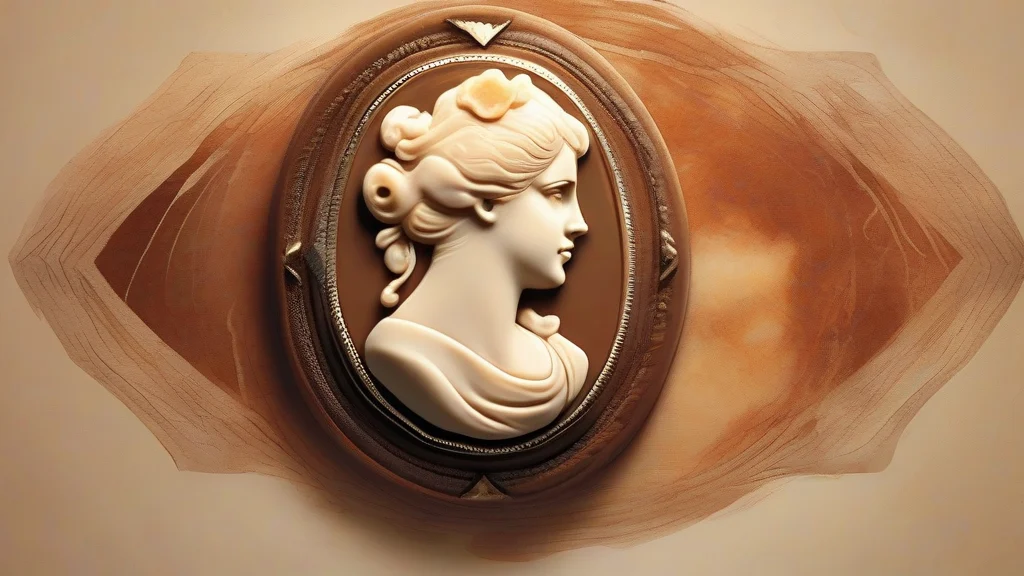
What does cameo mean?
A cameo is a small carving, traditionally executed on a gemstone, shell, or similar material, in which the design — most commonly a human profile — is raised above the background surface. The technique flourished in antiquity and again during the Renaissance, and carved cameos remain prized as jewelry and collector's items. In contemporary usage, however, the word is far more familiar in a figurative sense borrowed from the visual one: a cameo is a brief, often unannounced appearance by a well-known person in a film, television program, play, or other work, typically playing themselves or a minor role. Directors such as Alfred Hitchcock popularized this practice, making the director's cameo a recognized tradition of cinema. Whether describing a delicately carved brooch or a star's fleeting on-screen moment, the word consistently suggests something compact yet memorable — a small element that draws disproportionate attention. It is standard English in both British and American usage.
nounA small carving, typically in relief on a gemstone or shell, often depicting a profile portrait; also a brief but memorable appearance by a well-known person in a film, show, or other work.
- A small carved gemstone or shell piece with a raised design, usually a profile head.
- A brief, often notable appearance by a famous person in a work of art, film, or performance.
- A short, distinctive role or moment that stands out within a larger context.
"The veteran actor made a brief cameo in his daughter's debut film."
"She inherited a Victorian brooch set with an intricately carved cameo."
"Alfred Hitchcock was famous for his fleeting cameos in his own films."
Standard regular plural formation.
"The museum displayed several exquisite cameos from the Hellenistic period."
Before it meant a star's blink-and-you-miss-it film appearance, a cameo was literally a face — a tiny carved portrait worn as jewelry.
Reviewed by Deb Chak, Editor. AI-assisted content curated by RJS Tech Solutions LLP.
Etymology of cameo
The word 'cameo' entered English in the early 16th century from Italian 'cammeo', which itself derives from Latin 'cammaeus', likely ultimately of Middle Eastern origin (possibly Arabic 'qama'il' or Persian sources). The term originally referred exclusively to carved gems and shells featuring raised designs. The extended sense referring to brief appearances by distinguished persons in literature or drama emerged much later, in the mid-19th century, apparently drawing on the idea of a small, finely crafted piece embedded within a larger work.
How cameo is actually used
In modern usage, 'cameo' most often refers to the entertainment sense of a brief guest appearance by a notable figure. The original lapidary sense (a carved gem or shell) remains current among collectors and jewelers. Both senses carry a connotation of brevity and distinction — something small yet striking.
Easily confused with cameo
A cameo is carved in raised relief so the design stands above the surface, whereas an intaglio is incised or cut below the surface.