
What does medallion mean?
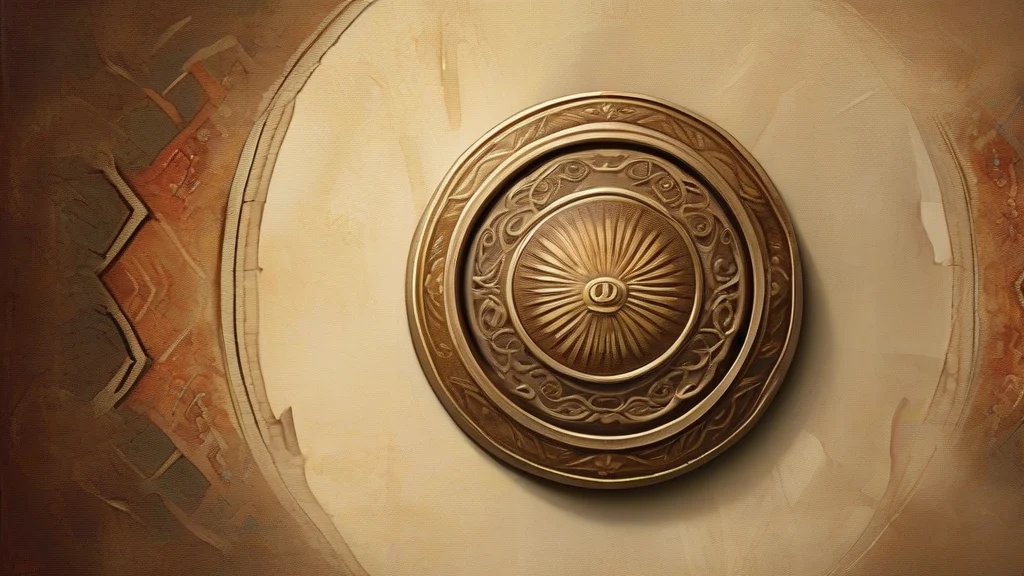
A medallion is a small, usually round metal disk bearing a portrait, symbol, inscription, or other design. It may be worn as jewelry, used to decorate furniture or architecture, or given as a commemorative object. Unlike a formal award, which commonly signifies achievement, rank, or service, a medallion often records a person, institution, place, or historical event. Medallions are especially associated with commemorative traditions, religious art, heraldry, and fine craftsmanship. The term can also refer broadly to a decorative, medal-like piece. In everyday English, “medal” is generally more appropriate for competition prizes and official honors, whereas “medallion” suggests something ornamental, personally symbolic, or issued to mark an occasion. The word is consequently common in descriptions of museums, monuments, religious objects, regalia, and commemorative awards.
nounA small, typically round medal, often made of metal and used as an ornament, decoration, or commemorative object. It may also refer to a medal awarded for distinguished service or achievement.
- A small, usually round metal object used as an ornament or decoration, often bearing a portrait, emblem, inscription, or symbolic design.
- A commemorative or decorative medal, distinct from or associated with a formal award, presented to commemorate an event or recognize a person.
"The museum displayed a gold medallion commemorating the historic expedition."
"She wore a medallion engraved with the initials of the ancient order."
"The university presented each graduate with a small commemorative medallion."
The plural is formed by adding -s.
"The collection includes several gold medallions from the seventeenth century."
A medallion is a medal with a memory: its value often comes not from competition or rank, but from the person, place, or event portrayed on it.
Reviewed by Deb Chak, Editor. AI-assisted content curated by RJS Tech Solutions LLP.
Where does medallion come from?
Medallion was borrowed into English from French, where it was related to médaille, from Italian medaglia, and ultimately from Latin metallum, meaning “metal.” The word entered English in the late sixteenth century for a small metal ornament or medal-like object. Its later development preserved associations with both decorative metalwork and commemorative pieces, while related forms such as medal and medallist developed alongside it.
How medallion is actually used
The word is formal and descriptive, especially in historical, artistic, heraldic, and commemorative contexts. In modern usage, “medal” is more usual for an award, while “medallion” tends to suggest a decorative or commemorative object.
Easily confused with medallion
A medal is generally an award or insignia given for achievement or service, whereas a medallion is often a decorative or commemorative disk, though the two terms can overlap.