What does cassoulet mean?
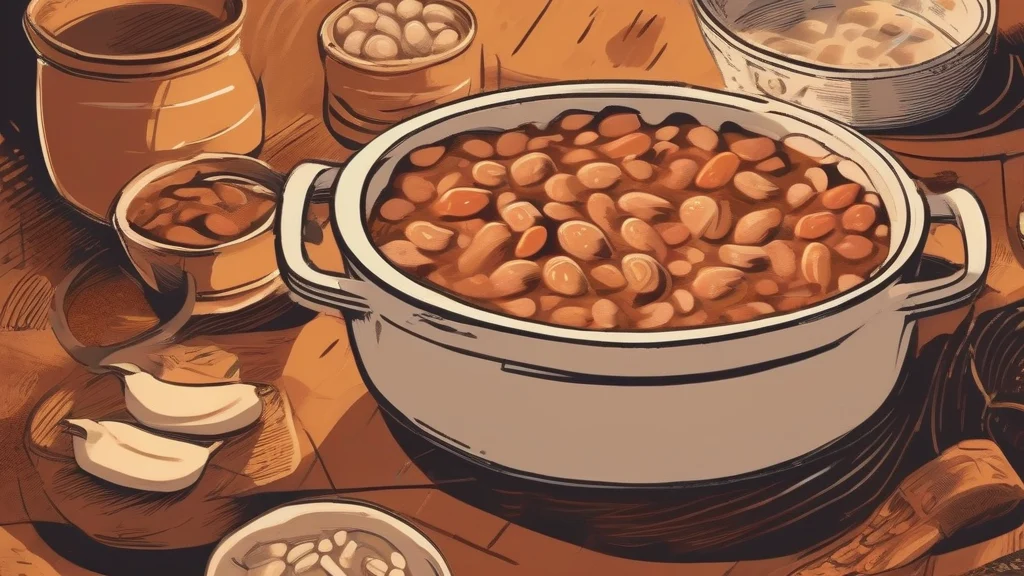
Cassoulet is a hearty French stew originating in the Languedoc region of southern France. It consists of white beans — often the prized Tarbais variety — slow-cooked with rich meats such as pork sausage, duck or goose confit, and pork skin, then baked until a flavorful crust forms on top. Traditionally prepared and served in a deep, round earthenware dish that shares the same name, cassoulet is closely associated with three towns that each claim their own definitive version: Castelnaudary, Carcassonne, and Toulouse. The word carries connotations of warmth, comfort, and rustic abundance; it is firmly associated with winter cooking and convivial, family-style dining rather than delicate haute cuisine. In English usage it functions as an uncountable noun referring to the dish itself, though it may be pluralized when discussing distinct regional variants. Cassoulet has become widely known outside France through French bistros and cookbooks, and it remains a touchstone of traditional southwestern French gastronomy.
nounA rich French stew of white beans slow-cooked with meat, typically pork sausage, duck or goose confit, and pork skin, traditionally baked in a deep earthenware casserole dish of the same name.
- A rich French stew of white beans baked slowly with meats such as pork sausage, duck confit, and pork skin.
- The deep earthenware pot in which this stew is traditionally cooked and served.
"On cold winter evenings, nothing warms the table quite like a bubbling cassoulet fresh from the oven."
"The bistro's winter menu features a cassoulet made with duck confit, Toulouse sausage, and Tarbais beans."
"She lifted the lid from the cassoulet to reveal a golden crust of bread crumbs over the bubbling beans."
Rarely pluralized; the plural appears chiefly when comparing regional styles of the dish (e.g., the cassoulets of Toulouse and Carcassonne) or referring to multiple individual servings.
"The cookbook compares the classic cassoulets of three rival towns in southern France."
In the French towns of Castelnaudary, Carcassonne, and Toulouse, cassoulet isn't just dinner — it's a point of fierce civic pride, with each town claiming its own version as the one true recipe.
Reviewed by Deb Chak, Editor. AI-assisted content curated by RJS Tech Solutions LLP.
Etymology of cassoulet
The word 'cassoulet' comes from the Occitan 'caçolet', a diminutive of 'cassole', meaning a deep pan or casserole dish — itself derived from the medieval Latin 'cattia', a ladle or pan, which traces further back to Greek 'kúathos', a cup or ladle. The dish and its name both originated in the Languedoc region of southern France. The same Latin root gives English the related word 'casserole'.
How cassoulet is actually used
Cassoulet carries a warm, rustic, and indulgent connotation — it evokes hearty home-style French country cooking rather than refined haute cuisine. It is treated as an uncountable mass noun when referring to the dish itself ('more cassoulet'), though a plural 'cassoulets' occasionally appears when referring to different regional versions of the dish or to individual prepared servings.
Easily confused with cassoulet
Cassoulet is a savory French bean-and-meat stew, while cassata is a sweet Italian sponge cake layered with ricotta and candied fruit.
Cassoulet is a thick, hearty baked bean stew; consommé is a clear, clarified soup.