What does caterwauling mean?
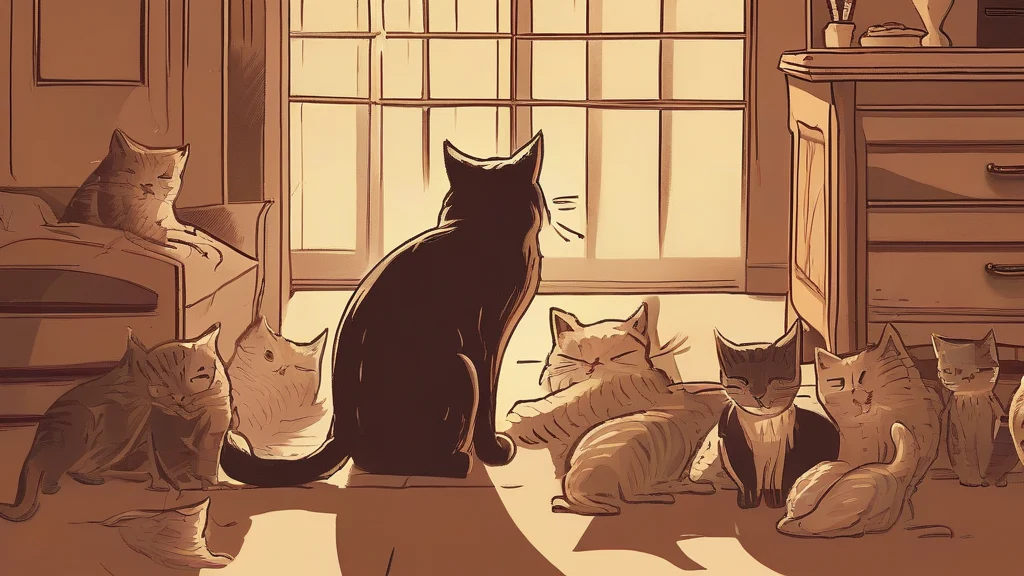
Caterwauling refers to a long, loud, wavering cry or yowl — most famously the raucous sound made by cats, particularly during mating season, when their nocturnal shrieking has tormented sleepers for centuries. By extension, the word describes any harsh, discordant clamor produced by people: the din of an unruly crowd, the squabbling of politicians, or the off-key wailing of amateur singers. Its connotations are almost always negative, suggesting not just volume but ugliness and lack of control; calling speech 'mere caterwauling' dismisses it as shrill, self-interested noise rather than meaningful discourse. Derived from a Middle Dutch word for tomcat combined with a verb meaning to cry like a cat, the term entered English in the medieval period and remains vivid today precisely because its sound echoes its sense. Whether describing animals or humans, it evokes chaos, complaint, and a distinctly feline intensity of displeasure.
A loud, shrill, wavering yowling sound, especially that of cats in heat; figuratively, any noisy, discordant outcry or quarrelsome clamor.
"The caterwauling outside the window signaled another night of territorial disputes among the neighborhood cats."
Used both literally of animals and figuratively of human commotion; the figurative sense carries a mocking or dismissive tone.
Making a loud, harsh yowling cry, as a cat does; figuratively, raising a loud, discordant uproar.
"The protesters were caterwauling so loudly that the speakers inside could not be heard."
Less common than the noun form; the base verb is 'caterwaul'.
Rarely used in the plural; 'caterwauling' is usually treated as an uncountable mass noun referring to the noise itself.
"The night was filled with the caterwaulings of lovesick cats."
The 'cater' in caterwauling literally means tomcat — so when people argue loudly at a meeting, they are, etymologically speaking, being compared to howling cats in heat.
Reviewed by Deb Chak, Editor. AI-assisted content curated by RJS Tech Solutions LLP.
Etymology of caterwauling
Caterwauling derives from the verb 'caterwaul', formed in Middle English from two elements: 'cater', from Middle Dutch 'cater' or Low German, meaning tomcat, and 'waul', from Middle Dutch 'wauwen' or related forms meaning to cry like a cat. The compound was in use by the late Middle Ages, with the noun 'caterwauling' following shortly after. The Germanic roots tie it to a family of words imitating feline cries.
Related word forms
How caterwauling is actually used
Both British and American English use the word; the literal feline sense and the figurative human sense are both current. The figurative use is often mildly derogatory or mocking, implying that the noise is not merely loud but unpleasantly shrill and undisciplined. The verb 'caterwaul' is less commonly used than the noun.
Easily confused with caterwauling
Despite both beginning with 'cater-', catercorner means positioned diagonally, while caterwauling refers to loud, harsh yowling.