What does caveman mean?
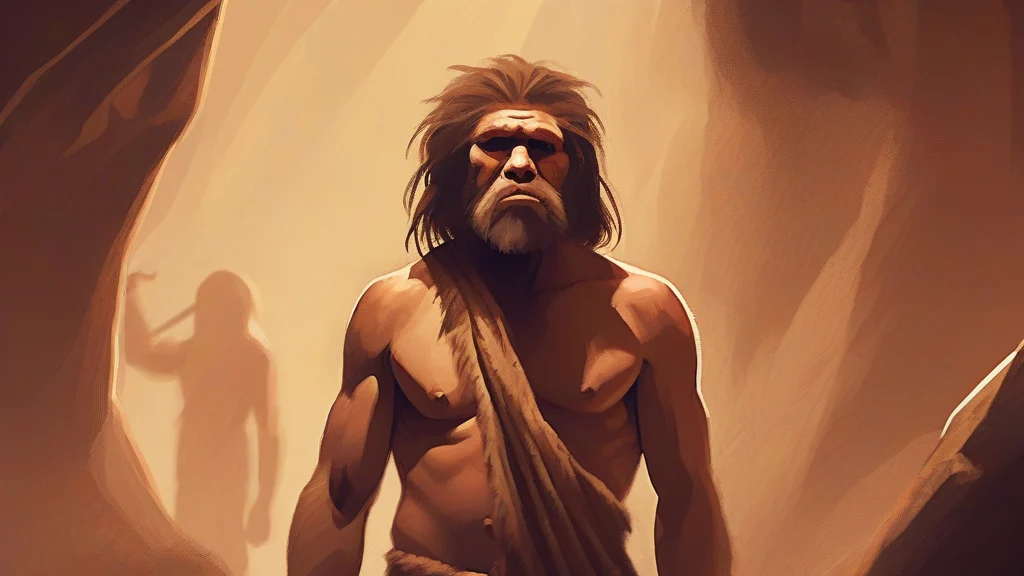
A caveman is, in its literal sense, a prehistoric human — typically imagined as a Stone Age figure clad in animal skins and sheltering in caves. The image owes more to nineteenth-century illustration than to archaeological reality: most early humans lived in temporary huts or open camps, but caves preserved their remains and artwork exceptionally well, fixing the association in the public imagination. Figuratively, calling someone a caveman is an informal insult implying crude manners, brute strength without refinement, or hopelessly outdated attitudes, as in remarks about a colleague's caveman approach to negotiation. The word carries a distinctly informal, often derogatory register, and can sound sexist when aimed at men's behaviour towards women. Its enduring popularity lies in the vivid shorthand it offers for the contrast between modern civility and imagined primitive life.
A prehistoric human, especially of the Palaeolithic period, popularly pictured as living in caves.
"The cartoon showed a caveman struggling to work a stone tablet like a laptop."
In scientific contexts, more precise terms such as 'Palaeolithic humans' or 'Neanderthals' are preferred.
Informal: a man regarded as crudely primitive, rough-mannered, or holding regressive attitudes.
"He turned into a caveman whenever the topic of housework came up."
Mildly derogatory; sometimes criticized as sexist when applied dismissively to men.
An irregular plural formed by changing the internal vowel (man → men), following the standard pattern of compounds ending in '-man'.
"The film depicted cavemen hunting mammoths across the tundra."
Despite the popular image, most prehistoric humans didn't actually live in caves — they just left their best evidence there.
Reviewed by Deb Chak, Editor. AI-assisted content curated by RJS Tech Solutions LLP.
Etymology of caveman
The word 'caveman' is a straightforward English compound of 'cave', from Latin 'cava' (hollow place), itself from 'cavus' meaning hollow, combined with 'man'. It arose in English during the nineteenth century, when discoveries of human remains and artefacts in European caves — such as those at Kent's Cavern and in the Neander Valley — captured popular attention. Related words sharing the Latin root include 'cavern', 'excavate', and 'concavity'. The female form 'cavewoman' developed later by analogy.
Related word forms
How caveman is actually used
The word is informal in its figurative sense and is often considered mildly derogatory when applied to people, sometimes carrying sexist overtones when used to dismiss men as insensitive. In scientific writing about prehistory, terms such as 'Palaeolithic humans' are preferred, since the image of humans dwelling primarily in caves is largely a popular misconception.
Easily confused with caveman
A cavewoman is the female equivalent; 'caveman' refers specifically to a male, though it is often used generically.
A troglodyte is literally a cave-dweller (human or animal), but figuratively it implies extreme reclusiveness or backwardness, while 'caveman' more often connotes crude or primitive behaviour.