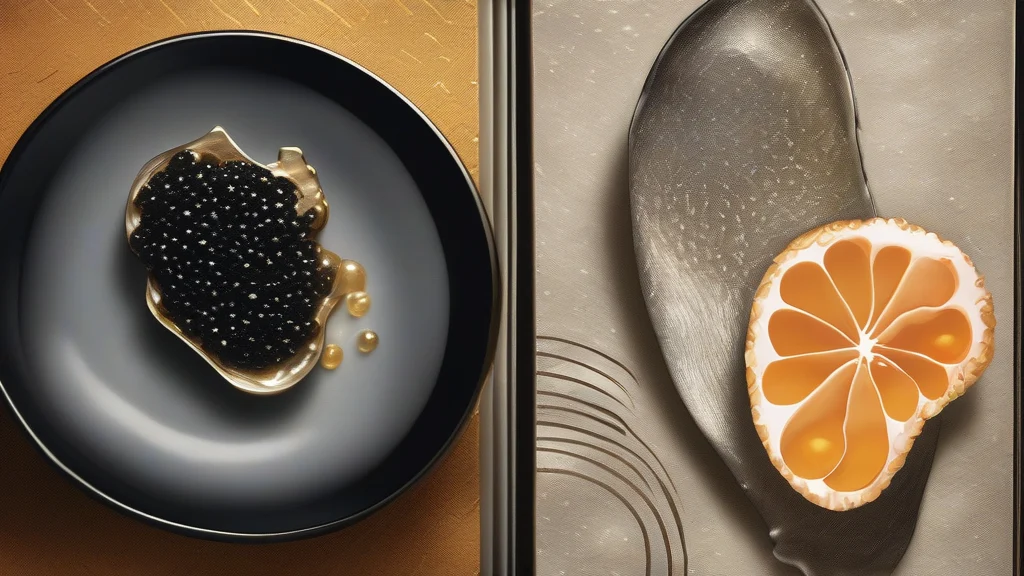
What does caviar mean?
Caviar is the salted roe, or eggs, of sturgeon and related large fish, prized worldwide as one of the great luxury foods. Traditionally harvested from species such as beluga, osetra, and sevruga sturgeon, it is served chilled, often in small quantities atop blinis, toast points, or boiled potatoes, and accompanied by crème fraîche, minced onion, or lemon. Because genuine sturgeon caviar comes from increasingly scarce and heavily regulated fish stocks, it commands extremely high prices and carries unmistakable connotations of wealth, celebration, and refinement. The word is used both literally, on menus and in food writing, and figuratively, as shorthand for anything opulent or exclusive. Related products such as salmon or lumpfish roe are sometimes sold as caviar but are usually qualified by the fish's name, since purists reserve the unqualified term for sturgeon roe alone.
nounThe salted roe (eggs) of sturgeon or other large fish, eaten as a delicacy, typically served chilled as an appetizer or garnish.
- Salted sturgeon roe eaten as a luxury delicacy.
- More broadly, the salted roe of other fish such as salmon or lumpfish, often qualified by the fish's name.
"She served the caviar on small blinis with a dollop of crème fraîche."
"The waiter presented a chilled tin of beluga caviar alongside toast points and lemon wedges."
"For a budget-friendly alternative, many restaurants top their canapés with salmon roe rather than true caviar."
Rare; the plural appears mainly when distinguishing different varieties or sources of caviar rather than counting individual portions.
"The tasting menu featured three caviars: osetra, sevruga, and a rare golden albino variety."
Caviar was once so plentiful in America that it was given away free in bars to make drinkers thirsty.
Reviewed by Deb Chak, Editor. AI-assisted content curated by RJS Tech Solutions LLP.
Etymology of caviar
The word "caviar" entered English in the early 16th century, borrowed through French or Italian from Turkish "havyar," which itself likely derives from a Persian source relating to roe or egg-bearing fish. It spread across European languages at roughly the same time as trade in salted sturgeon roe from the Black and Caspian Sea regions expanded westward. The spelling has varied historically — forms such as "caviare" persist in British usage — but the modern English form stabilized around the word's Turkish and Persian core.
How caviar is actually used
Caviar is an uncountable noun in most contexts and carries strong connotations of wealth, luxury, and fine dining. In strict culinary usage it refers only to salted sturgeon roe; products made from other fish are usually labeled with the source fish (e.g., "salmon caviar") or called simply "roe."
Easily confused with caviar
"Caviare" is simply a British variant spelling of the same word, not a different thing.