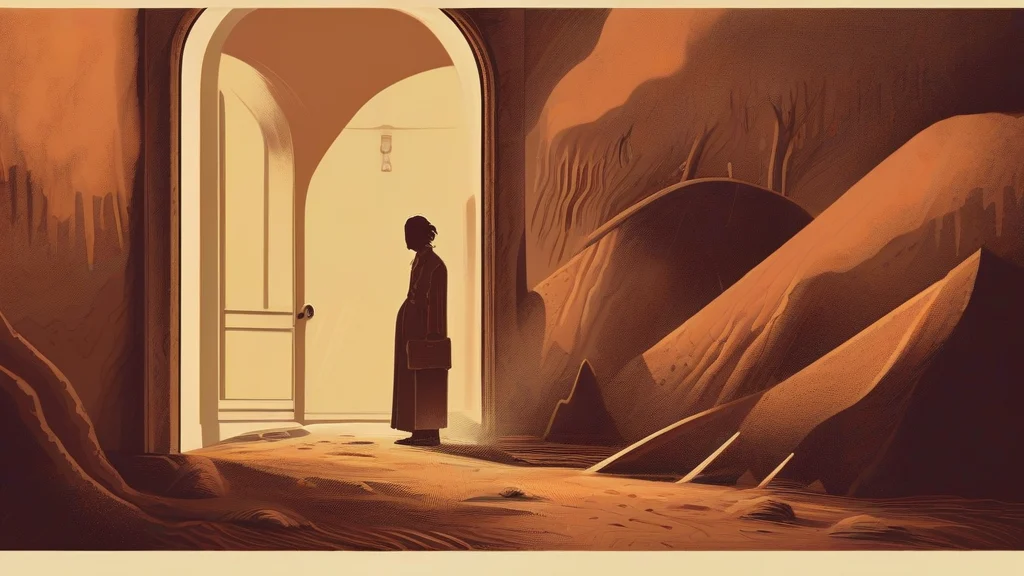
What does bizarre mean?
Bizarre is an adjective describing something extremely strange or unusual — often to the point of being startling, inexplicable, or memorable. It is stronger than words like "odd" or "peculiar," implying a level of weirdness that commands attention, whether amusing, disturbing, or simply baffling. The word applies freely to people, events, appearances, ideas, and situations: one might describe a bizarre costume, a bizarre dream, or a bizarre sequence of accidents. It is fully at home in both casual conversation and formal journalism or academic writing, making it a versatile intensifier of strangeness. English acquired it in the seventeenth century by way of French, ultimately tracing back to Italian "bizzarro," which once meant both "furious" and "quirkily individual." Related derivatives include the adverb "bizarrely" and the noun "bizarreness." Because it vividly signals deviation from the normal without specifying whether the result is comic or sinister, "bizarre" remains one of English's most expressive words for the strange and unexpected.
adjectiveVery strange or unusual, often in a way that is startling, striking, or hard to explain.
- Very strange or unusual in appearance, character, or behavior, often strikingly or unsettlingly so.
"The film's plot grew increasingly bizarre as it neared its climax."
"The abandoned house was filled with bizarre objects collected by its late owner."
"It was a bizarre turn of events that no one could have predicted."
English borrowed "bizarre" twice over: through French, but ultimately from an Italian word that originally meant both "furious" and "heroic" — so a word for the wildly odd once described warriors.
Reviewed by Deb Chak, Editor. AI-assisted content curated by RJS Tech Solutions LLP.
Etymology of bizarre
Bizarre entered English in the early seventeenth century, borrowed from French "bizarre." The French word itself came from Italian "bizzarro," which historically carried meanings such as "furious," "irascible," and also "individual" or "quirky" — a striking semantic range for a word now devoted to pure strangeness. The deeper origin of the Italian term is uncertain, though it has been linked to Basque "bizar" (beard) as a folk-etymological possibility. Its cognate forms include Italian "bizzarro" and the derived French noun "bizarrerie."
Related word forms
How bizarre is actually used
"Bizarre" is a common, neutral-register word used in both formal writing and everyday speech. It carries a connotation of strangeness that is noticeable and often memorable rather than merely mild; for gentler strangeness, words like "odd" or "unusual" are more appropriate.
Easily confused with bizarre
"Brassiere" is a woman's undergarment; "bizarre" means very strange — the two merely sound somewhat alike and share no meaning.