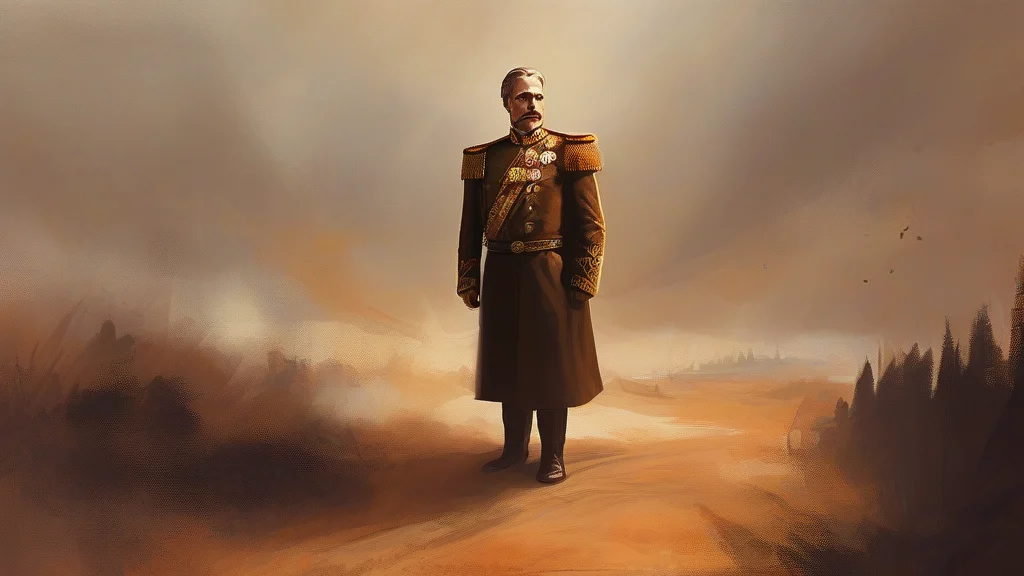
What does czar mean?
A czar was the male sovereign — an emperor — who ruled Russia from the mid-sixteenth century until the monarchy's abolition in 1917. The title derives from "Caesar," reflecting the claim of Russian rulers to be heirs of the Roman and Byzantine imperial tradition. The first ruler formally crowned as czar was Ivan IV (Ivan the Terrible) in 1547, and the line ended with Nicholas II, who abdicated during the Russian Revolution. Beyond its historical meaning, "czar" has entered everyday political language, especially in American usage, as an informal label for a powerful official charged with overseeing a particular policy area — hence titles like "drug czar" or "energy czar." This figurative use suggests sweeping authority, sometimes with a hint that such power is excessive or unaccountable. In British English the word is more commonly spelled "tsar," though the two spellings are fully interchangeable in meaning.
nounA male monarch who ruled Russia until 1917; by extension, a person with great authority or power in a particular field or organization.
- A male emperor or monarch of pre-1917 Russia.
- Informally, any person wielding great authority over a specific domain, especially a government official appointed to oversee a policy area.
"The energy czar was appointed to coordinate the nation's response to the fuel crisis."
"Nicholas II was the last czar of Russia, abdicating in 1917 amid revolution and war."
"The president named a former general as the new drug czar to lead the anti-trafficking campaign."
Standard pluralization applies. Historically, "czars" may refer to successive rulers; in contemporary usage it often refers collectively to multiple policy officials.
"The administration has appointed several czars to manage overlapping policy portfolios."
The Russian title 'czar' ultimately descends from Julius Caesar himself — every Russian emperor was, in name, an heir to Rome.
Reviewed by Deb Chak, Editor. AI-assisted content curated by RJS Tech Solutions LLP.
Etymology of czar
The word comes from Russian "tsar" (spelled "czar" through Polish influence), which itself derives from Latin "Caesar," the family name of Julius Caesar adopted by Roman emperors. It entered English in the sixteenth century, around the time Ivan IV assumed the title. Related forms include the German "Kaiser," likewise descended from "Caesar," making these titles cognates across European languages.
Related word forms
How czar is actually used
The figurative use ("drug czar," "energy czar") is informal but widespread in journalism and politics, particularly in American English. It can carry a slightly critical connotation, suggesting centralized or unaccountable power. The spelling "tsar" predominates in British English; both are acceptable.
Easily confused with czar
"Tsar" is simply the more common British spelling of the same word, while "czar" is the spelling more typical in American English — they refer to identical meanings.