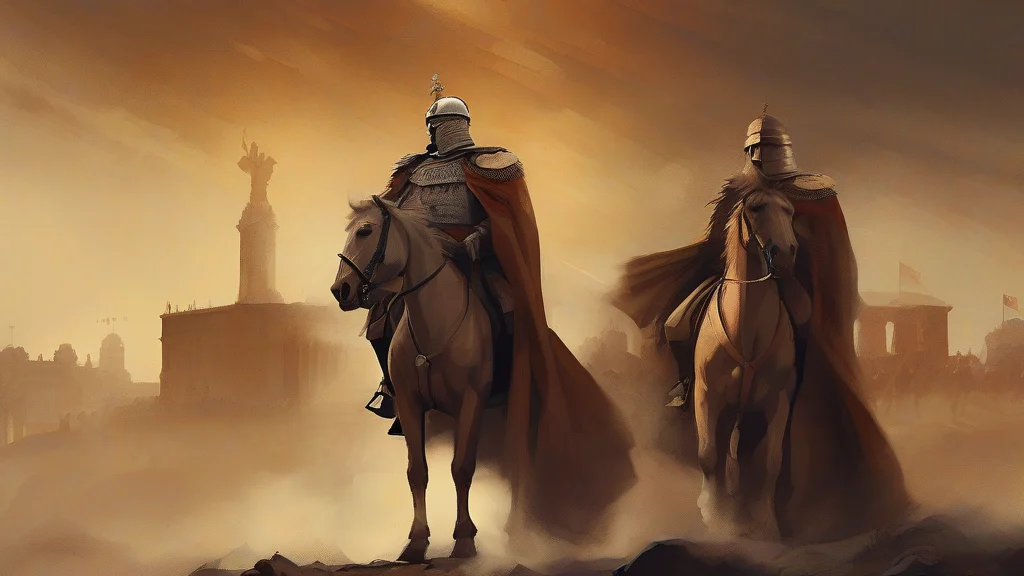
What does kaiser mean?
The term kaiser refers to a German emperor, historically one who ruled over the Holy Roman Empire or the German Empire. The title, borrowed from the Latin 'caesar', signifies imperial authority and power. The most notable kaisers include Wilhelm II, the last German Emperor, and Franz Joseph, who ruled Austria-Hungary. The term carries significant historical weight, evoking images of monarchies and empires of Central Europe. While not commonly used in contemporary political contexts, it remains relevant in discussions of European history and culture. Understanding the term kaiser provides insight into the complex political landscape of 19th and 20th-century Europe.
nounA kaiser is a German emperor, particularly one of the Holy Roman Empire or the German Empire. The title is derived from the Latin 'caesar', meaning emperor.
- A German emperor
- A title of imperial rank
"The Kaiser Wilhelm II was the last German Emperor and King of Prussia."
"The kaiser's role was largely ceremonial in the later years of the German Empire."
"Kaiser Franz Joseph ruled Austria-Hungary for 68 years."
The plural form 'kaisers' is used when referring to multiple emperors or rulers with this title.
"Several kaisers ruled Germany during its imperial period."
Reviewed by Deb Chak, Editor. AI-assisted content curated by RJS Tech Solutions LLP.
Etymology of kaiser
The word 'kaiser' originates from the Latin 'caesar', which means emperor. This Latin term was used in the Holy Roman Empire to refer to its emperors, adopting it from the Roman Empire's imperial title. Over time, 'kaiser' became specifically associated with the rulers of Germany, particularly during the German Empire (1871-1918).
How kaiser is actually used
The term 'kaiser' is often associated with the German Empire and has historical connotations. It is not commonly used in modern contexts except in reference to historical figures or in certain cultural contexts.