
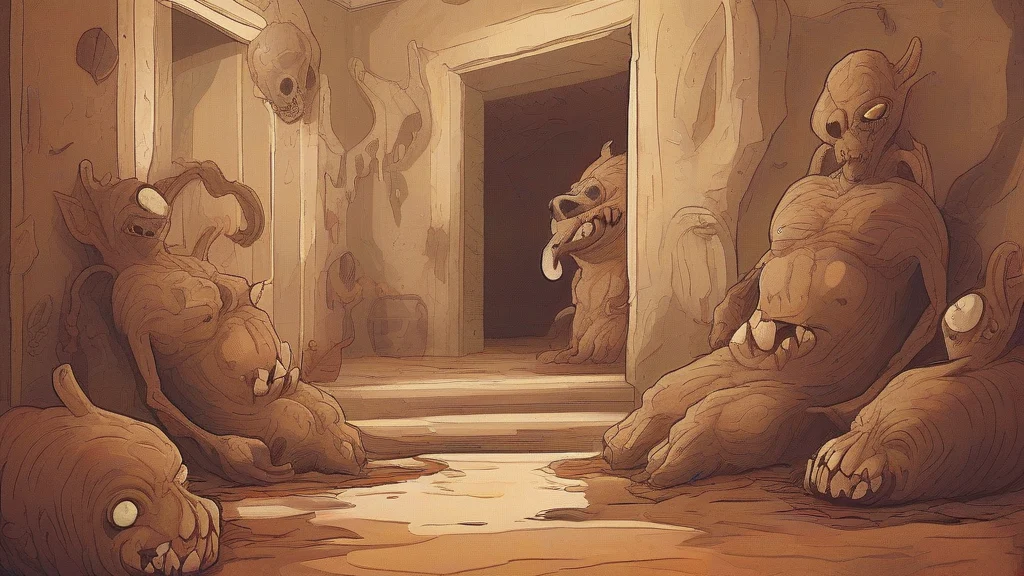
What does grotesque mean?
Grotesque describes something so strange, unnatural, or unsettling that it can seem comic, macabre, or deliberately absurd. As an adjective, it commonly condemns a distorted face, grotesque behavior, exaggerated parody, or lurid imagery. Its force lies in suggesting more than ordinary strangeness: a grotesque scene can blur beauty, horror, and ridicule. In art and architecture, “grotesque” has a more specific historical meaning, referring to fanciful decorative forms combining human, animal, and imaginary features. As a noun, a grotesque is such a figure or creation. The word is useful because it captures the unsettling edge between amusement and repulsion while also preserving a long art-historical vocabulary. Its tone is more literary and forceful than plain “weird,” and context determines whether it conveys absurdity, ugliness, moral disgust, or simply the fantastical.
So strange, unnatural, macabre, or absurd as to be unsettling or ridiculous. In art and architecture, specifically fantastic or fanciful, often using distorted human, animal, and imaginary forms.
"The stage was dominated by a grotesque mask with bulging eyes and a twisted mouth."
The adjective is often critical or deliberately exaggerated, but it can also be descriptive in discussions of art, architecture, and folklore.
A bizarre, monstrous, or comically exaggerated person, thing, or creation, especially a fanciful decorative figure in sculpture, painting, or architecture.
"A grotesque with clawed hands and serpentine legs crouched above the doorway."
In art history, the noun can refer both to individual figures and to the broader ornamental tradition.
The standard plural of the noun, especially when referring to figures or decorative forms.
"The sculptor carved a series of grotesques into the cathedral's columns."
Grotesque began underground: Renaissance Europeans used the word for the wild hybrid decorations rediscovered in Roman “grottoes.”
Reviewed by Deb Chak, Editor. AI-assisted content curated by RJS Tech Solutions LLP.
Etymology of grotesque
English grotesque came through French grotesque from Italian grottesco, a term associated with grotta, meaning “cave” or “grotto.” It originally referred to the fantastic, hybrid ornament found in Roman decorations rediscovered in underground rooms during the Renaissance. The same origin accounts for the word's modern association with strangely distorted or monstrous forms.
Related word forms
How grotesque is actually used
The word is more literary and forceful than everyday terms such as “weird.” Its connotation ranges from comic exaggeration to moral disgust, depending on context; in art history, it has the more specific historical meaning described above. Standard American pronunciation usually places stress on the second syllable, while British pronunciation commonly stresses the first.