
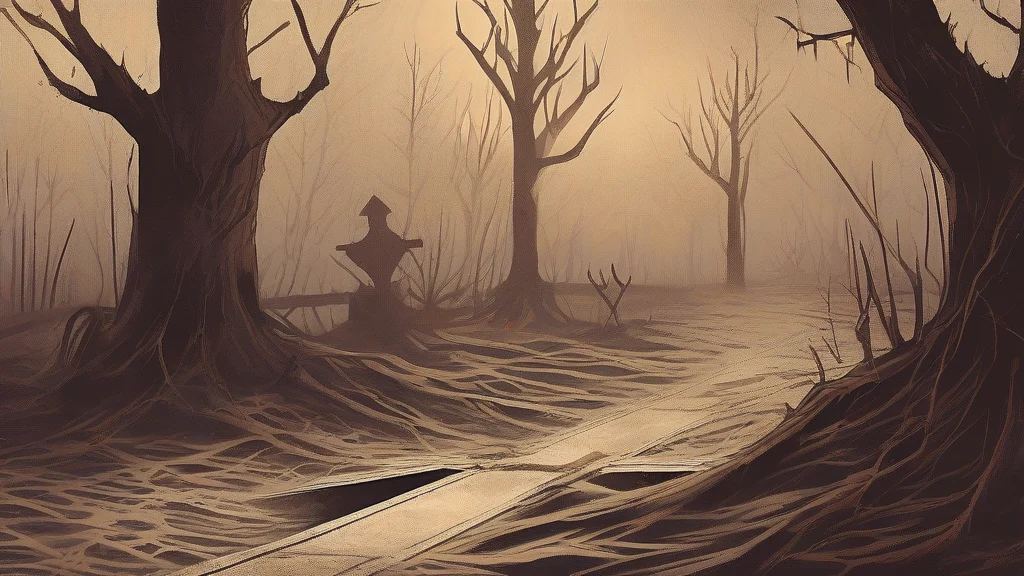
What does macabre mean?
Macabre is an adjective meaning grim, eerie, or gruesome in connection with death. It often describes stories, images, places, or events that evoke corpses, suffering, or unsettling scenes. The word can also carry a humorous sense: macabre humor treats death, disease, or disaster as a darkly comic subject, often producing laughter mixed with discomfort. In ordinary use, macabre suggests something more deliberately unsettling or theatrical than merely sad, and more focused on death than the broader adjective morbid. It is common in phrases such as macabre humor, macabre imagery, and macabre tale. The term is especially frequent in discussions of literature, film, art, and performance, where an unsettling treatment of death may be intentionally provocative. Its memorable history comes from the medieval “dance of death,” a recurring artistic theme in which death was represented as a figure leading people of every social rank toward the grave.
adjectiveRelating to or evoking death in a grim, gruesome, or unsettling way. It can also describe humor or entertainment that treats death or suffering darkly or irreverently.
- Characterized by or evoking death, corpses, or the grisly details associated with them.
- Grim, bleak, or unsettling, especially in its treatment of death, suffering, or the macabre.
- Darkly humorous or irreverent, especially when dealing with death or suffering.
"The documentary combined striking photographs with a macabre sense of humor."
"The abandoned hospital had a macabre atmosphere that unsettled everyone who entered."
"The comedian's macabre jokes made the audience laugh uncomfortably."
Macabre means “of death,” but its famous use is in the phrase “macabre humor”—a reminder that darkness can be unsettling and funny at the same time.
Reviewed by Deb Chak, Editor. AI-assisted content curated by RJS Tech Solutions LLP.
Where does macabre come from?
The English word macabre was borrowed from French in the 19th century. French macabre developed in the context of danse macabre, or “dance of death,” a medieval and early modern artistic theme depicting death as a figure that seized people regardless of social status. The phrase helped establish the modern English word's association with death, skeletons, corpses, and scenes designed to provoke fear or reflection.
Related word forms
How macabre is actually used
Macabre is especially associated with artistic, literary, and humorous treatments of death. It can be emotionally serious or deliberately dark, depending on context.
Easily confused with macabre
Macabre describes a grim or unsettling treatment of death, while gory more specifically emphasizes graphic physical detail, such as blood or injury.
Macabre commonly evokes death or the macabre in an artistic or humorous context, whereas morbid more broadly denotes an unhealthy or excessively fascination with death, disease, or unpleasant subjects.