
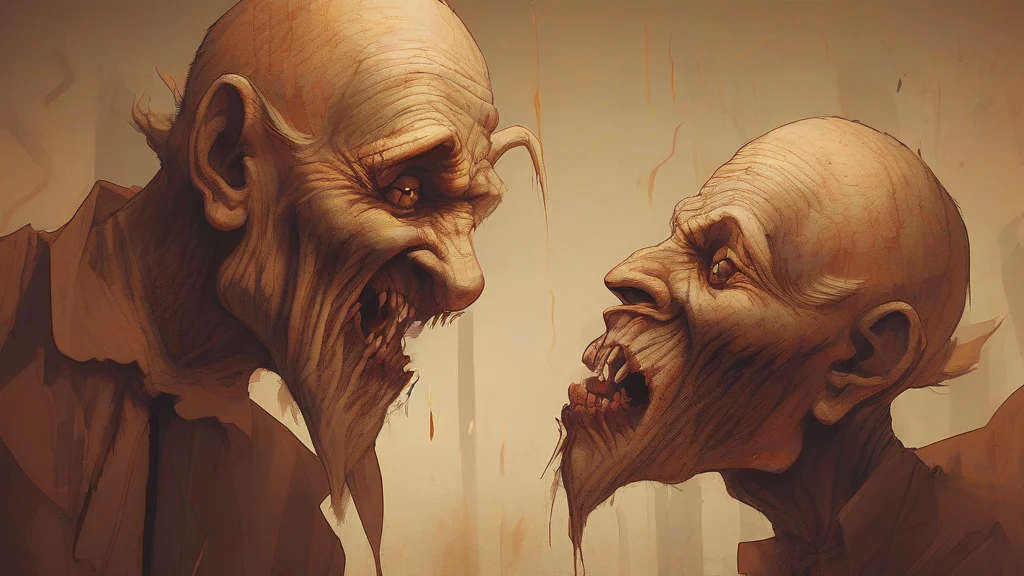
What does grotesquely mean?
Grotesquely is an adverb meaning “in a grotesque or bizarre manner.” It is commonly used to describe appearances, images, behavior, situations, or exaggerations that seem bizarre, macabre, disturbing, or absurdly distorted. The word often suggests something more extreme and unsettling than simply being unusual: grotesquely deformed masks, grotesquely exaggerated acting, and grotesquely comic situations can all be described this way. Its tone can range from mocking and humorous to dark or frightening, depending on context. Grotesquely is useful when the writer wants to emphasize the strange visual or dramatic quality of something rather than merely call it odd. It belongs to the standard vocabulary of both British and American English and is a familiar companion to the adjective grotesque.
adverbIn a grotesque, bizarre, macabre, or absurdly exaggerated manner.
- In a grotesque, bizarre, macabre, or absurdly exaggerated manner.
"The masks were grotesquely distorted, turning every smile into a nightmare."
"The masks were grotesquely distorted, turning every smile into a nightmare."
"The comedian's imitation was grotesquely exaggerated, drawing laughter from the crowd."
From caves to chaos: the word began with designs in underground grottoes before becoming a synonym for bizarre, macabre, and wildly exaggerated.
Reviewed by Deb Chak, Editor. AI-assisted content curated by RJS Tech Solutions LLP.
Etymology of grotesquely
The adverb was formed in English by adding the suffix -ly to grotesque. That adjective came through French from Italian grottesco, a term associated with grottesche, ornamental designs discovered in caves or grottoes; grotta ultimately derives from Latin crypta, from Greek kryptē, meaning “hidden.” The modern sense developed from the bizarre, fantastic character of these cave-associated designs into a broader description of something strange, macabre, or comically exaggerated.
How grotesquely is actually used
The adverb is especially common in descriptions of distorted appearances, frightening imagery, exaggerated behavior, and macabre or absurd situations. It can be humorous, but it often carries a stronger, more unsettling or grotesque implication than merely saying something is strange.