
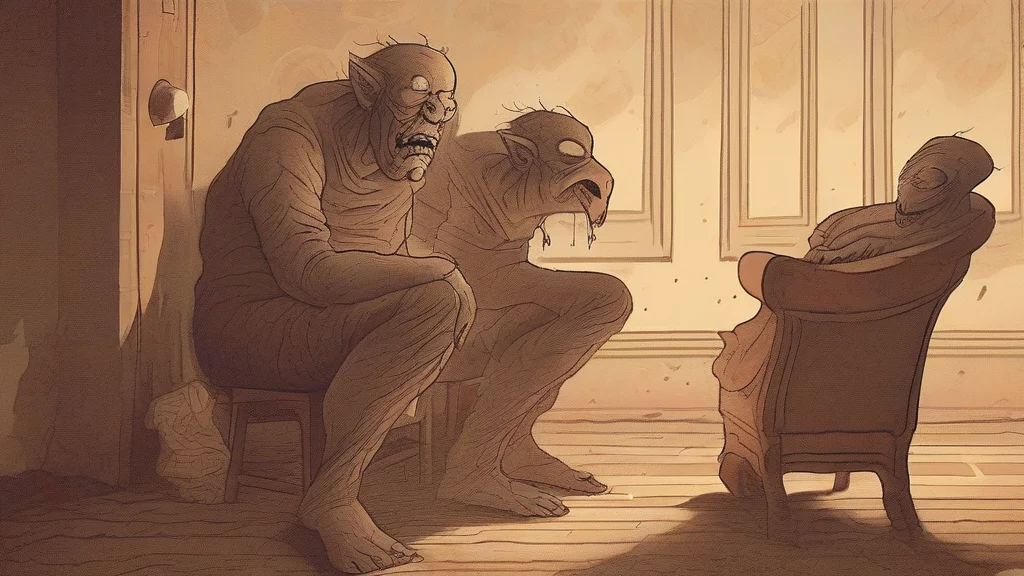
What does grotesqueness mean?
Grotesqueness is a formal noun meaning the quality of being grotesque, or bizarre, distorted, unsettling, or unnaturally strange. It may describe the appearance of a person or object, the character of a situation, or the effect of an artistic work. The word is not limited to physical ugliness: grotesqueness can arise from grotesque exaggeration, moral corruption, absurdity, or the collision of things that should not be together. In art and criticism, it often names a deliberately exaggerated mode that produces surprise, discomfort, or dark humor. In ordinary discussion, it can be more severe than strangeness and more specific than ugliness, implying that something seems deformed or profoundly out of place. Because it develops from the same vocabulary as “grotesque,” it carries an established association with strange, fanciful, and sometimes macabre forms. The noun is most often uncountable, though a rare plural is possible when separate instances or kinds of grotesqueness are being discussed.
nounThe quality of being grotesque: bizarre, distorted, ugly, or unnaturally strange. It can describe a disturbing appearance, an absurd situation, or a deliberately exaggerated artistic style.
- The quality or character of being grotesque, especially through ugliness, distortion, exaggeration, or unnatural strangeness.
- The bizarre or unsettling quality of a person, object, situation, or artistic style.
"The film captures the grotesqueness of life in a war-torn city without losing sight of the people caught up in it."
"The grotesqueness of the masks startled visitors when they first entered the gallery."
"Her essay explores the grotesqueness of modern advertising, where exaggeration has become an ordinary technique."
The plural is rare; the noun is normally treated as uncountable.
"The curator identified several distinct grotesquenesses in the collection's later works."
Grotesqueness begins with a subterranean surprise: the word ultimately comes from Italian words associated with caves, where remarkable ancient Roman decorations were rediscovered.
Reviewed by Deb Chak, Editor. AI-assisted content curated by RJS Tech Solutions LLP.
Etymology of grotesqueness
The word comes through English “grotesque,” which was borrowed from Italian “grottesco.” Italian “grottesco” developed from “grotta,” meaning “cave,” referring to grottoes in Rome where unusual ancient Roman wall decorations were discovered. The English adjective and noun initially referred to ornamental forms in that manner, and later broadened to include bizarre, distorted, and comically exaggerated things.
How grotesqueness is actually used
Generally formal or literary. The word can suggest genuine ugliness or moral horror, but it can also describe an intentionally bizarre artistic effect; context determines whether the tone is condemnatory, comic, or surreal.
Easily confused with grotesqueness
“Grotesque” is the adjective or noun describing something bizarre, distorted, or grotesque, while “grotesqueness” is the noun for the quality of being grotesque.