What does cecropia mean?
Cecropia refers to a genus of fast-growing tropical American trees prized by ecologists for their role in rainforest regeneration. Characterized by slender, often hollow trunks, ringed nodes, and very large umbrella-like palmate leaves, cecropias are classic pioneer species, quickly colonizing gaps and clearings where forest has been disturbed. Many species maintain remarkable partnerships with Azteca ants, which nest inside the hollow internodes and defend the tree against herbivores and competing vines. In North America, "cecropia" also commonly denotes the cecropia moth (Hyalophora cecropia), the continent's largest native moth, famous for its striking wingspan and eye-spotted wings. The name derives from Cecrops, a legendary half-serpent king of ancient Athens, reflecting early naturalists' taste for classical allusion. The word appears chiefly in botanical, zoological, and nature writing, lending passages an air of scientific precision while evoking lush tropical landscapes and nocturnal wonder alike.
Any of various fast-growing tropical American trees constituting the genus Cecropia, having hollow jointed stems, huge palmately lobed leaves, and frequently a mutualistic association with ants that live within the stems.
"A young cecropia had sprung up in the abandoned clearing within a single season."
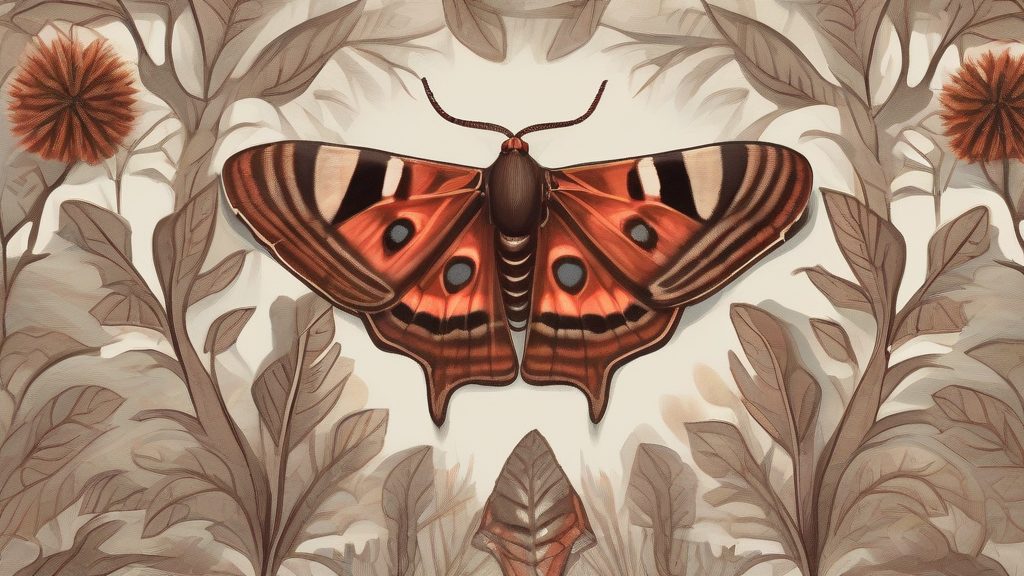
Informal short form of cecropia moth: Hyalophora cecropia, the largest native moth of North America, with distinctive reddish-brown, white-, and black-marked wings.
"She photographed a cecropia resting motionless on the fence post until dusk."
Standard English plural, used for both multiple trees and multiple moths.
"Cecropias lined the riverbank, their pale trunks gleaming in the sun."
The cecropia tree houses ants in its hollow trunk like a landlord offering rooms — and in return, its tiny tenants attack anything that threatens the tree.
Reviewed by Deb Chak, Editor. AI-assisted content curated by RJS Tech Solutions LLP.
Etymology of cecropia
The word "cecropia" comes from New Latin Cecropia, the scientific genus name assigned to these trees, itself derived from Greek Kekrops, the name of the mythical half-serpent founding king of Athens. The name was applied to the trees when European naturalists formally classified them in the eighteenth century, and it was later extended to the cecropia moth, whose species epithet cecropia likewise honors the same mythological figure. Related forms include the adjective "Cecropian," also drawing on the Cecrops root.
How cecropia is actually used
"Cecropia" is primarily used in scientific, ecological, and nature-writing contexts rather than everyday conversation. When referring to the moth, it typically appears as part of the compound "cecropia moth" or in entomological discussion; the tree sense dominates in botany and tropical ecology.
Easily confused with cecropia
"Cercopia" is simply a common misspelling; the correct spelling is "cecropia," with a "c" after the initial "e."