What does cedarbird mean?
Cedarbird is an informal North American name for the cedar waxwing (Bombycilla cedrorum), a sleek, crested songbird found across most of the continent. The name reflects two of the bird's defining traits: its silky, polished plumage—resembling fine waxed fabric—and its strong appetite for the berries of eastern red cedar and other junipers. Cedarbirds travel in flocks, often descending en masse on fruiting trees and shrubs, where they can strip branches bare in hours. They are recognizable by their tan-and-gray bodies, bold black eye masks, pointed crests, and the bright yellow tail tips and waxy red wing markings that give the waxwing family its name. While birders and ornithologists typically say 'cedar waxwing,' the shorter folk term cedarbird survives in regional usage, field notes, and older literature, making it a charming example of how common names capture both a bird's appearance and its habits.
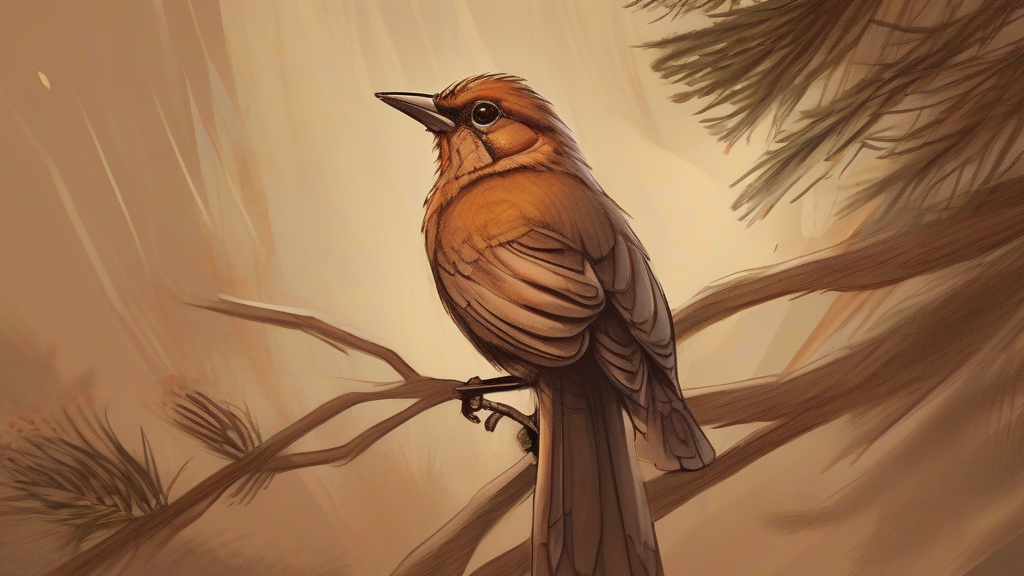
nounA North American songbird, the cedar waxwing (Bombycilla cedrorum), noted for its silky brown crest, black mask, and waxy red wing tips, and named for its fondness for cedar berries.
- The cedar waxwing (Bombycilla cedrorum), a crested North American songbird that feeds heavily on berries, especially those of junipers and cedars.
"A flock of cedarbirds stripped the juniper hedge bare in a single afternoon."
"We watched the cedarbirds swoop down to feast on the ripe serviceberries along the fence line."
"In winter, a small flock of cedarbirds often strips every berry from our holly bushes."
The regular plural 'cedarbirds' is standard; older texts sometimes leave the noun unmarked in collective reference.
"Flocks of cedarbirds gather wherever the berry crop is heaviest."
Reviewed by Deb Chak, Editor. AI-assisted content curated by RJS Tech Solutions LLP.
Etymology of cedarbird
The word cedarbird is a straightforward English compound of 'cedar' and 'bird', coined in North America as a folk name for the cedar waxwing, whose fondness for juniper (often called cedar) berries made the association obvious. 'Cedar' itself traces back through Latin cedrus to Greek kedros, ultimately borrowed from a Semitic source. The compound arose alongside many other vernacular bird names recorded by American naturalists in the nineteenth century.
How cedarbird is actually used
Cedarbird is an informal American folk name for the cedar waxwing; the compound name 'cedar waxwing' is the standard term in ornithology and general use. The plural may appear as either 'cedarbirds' or 'cedarbird' in older field guides, but 'cedarbirds' is standard.
Easily confused with cedarbird
The Bohemian waxwing is a larger relative with gray underparts and yellow-and-white wing markings, while the cedarbird has pale yellow underparts and is found mainly in North America.