
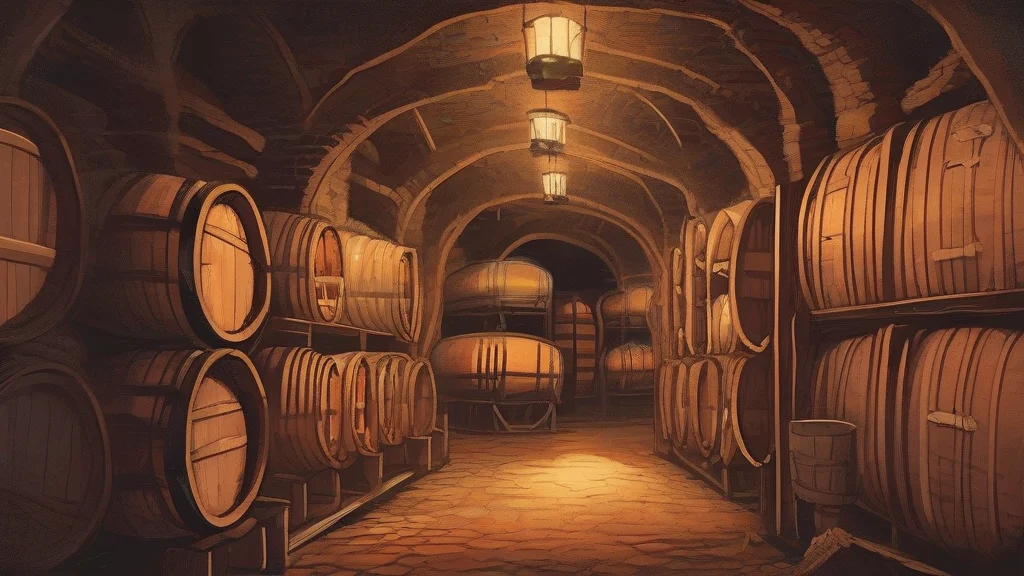
What does cellaring mean?
Cellaring refers to the practice of storing goods — most often wine — in a cellar so that they can age, mature, or simply be kept in good condition over time. The term derives from 'cellar', the underground room traditionally used for storage because of its naturally cool, stable temperature and darkness. In the world of wine, cellaring is treated as something of an art: collectors speak of a bottle's 'cellaring potential' and judge whether a vintage will improve over ten, twenty, or fifty years. Beyond wine, the word can apply to any long-term underground or basement storage. Its connotations are almost entirely positive, suggesting patience, foresight, and connoisseurship — the willingness to wait years for something to reach its best. The word appears chiefly in specialist writing about wine and spirits, though it is readily understood by anyone familiar with the idea of laying down bottles for the future.
The action or practice of storing items, especially wine, in a cellar for aging or safekeeping.
"Good cellaring can double the lifespan of a fine wine."
Used as an uncountable noun; no plural form.
Present participle of 'cellar': to store something in a cellar.
"They are cellaring the cases until their daughter's twenty-first birthday."
Great wines aren't finished when they're bottled — decades of quiet cellaring in a dark, cool cellar is what turns them into legends.
Reviewed by Deb Chak, Editor. AI-assisted content curated by RJS Tech Solutions LLP.
Etymology of cellaring
Cellaring comes from 'cellar', which entered Middle English from Anglo-Norman and Old French 'celier', ultimately deriving from the Latin 'cella', meaning a small room or storeroom. The same Latin root gives English the words 'cell' and 'cellular'. The verb 'to cellar' — to store in a cellar — arose by conversion from the noun, and 'cellaring' is its gerund and present participle.
Related word forms
How cellaring is actually used
Most common in the language of wine appreciation and collecting, where it carries positive connotations of patience, connoisseurship, and anticipation of future enjoyment. Used as a gerund ('Cellaring improves this wine') more often than as a progressive participle ('They are cellaring the bottles'). Rare outside food-and-drink contexts.
Easily confused with cellaring
'Selling' means offering goods in exchange for money, while 'cellaring' means storing items (typically wine) underground or in a cellar; the two sound similar but differ in both vowel quality and meaning.