
What does cellar mean?
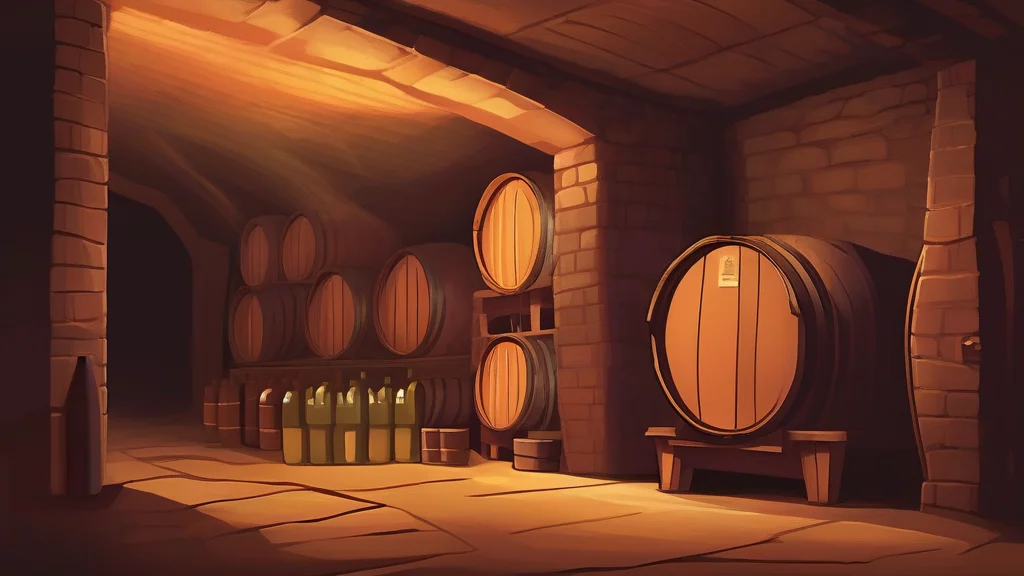
A cellar is a room or set of rooms located wholly or partly below ground level within a building, most commonly used for storage. Cellars are traditionally associated with keeping wine, beer, preserved foods, root vegetables, and household goods, since underground spaces maintain cooler, more stable temperatures than rooms above ground. In American usage, the word overlaps considerably with "basement," though it usually implies a plain, unfinished storage space rather than a lived-in one; in British usage, it more strictly denotes an underground storeroom, particularly one holding alcohol. Common fixed expressions include "wine cellar," "storm cellar" (a shelter built against severe weather), and "root cellar" (an earth-floored store for produce). The word derives from Latin cella, meaning a small room or storeroom, via Old French celier. Figuratively, "cellar" appears in phrases like "cellar-dwelling" to describe sports teams at the bottom of a league table, extending its sense of being at the lowest level.
nounA room, or set of rooms, in a building, typically below ground level, used for storage — especially for wine, food, fuel, or other goods.
- An underground or partly underground room in a building used for storing goods such as wine, food, coal, or preserves.
- (In British usage) The basement of a building more generally, including finished or habitable below-ground space.
"The old house still had a cool stone cellar where the wine aged perfectly."
"They kept a rack of Bordeaux in the cellar beneath the kitchen."
"During the tornado warning, the family took shelter in the storm cellar."
Standard plural; used both literally (multiple storage rooms) and figuratively (e.g., "the cellars of a great estate").
"The chateau's vast cellars held bottles dating back over a century."
The phrase "cellar door" is famously cited by linguists as one of the most beautiful-sounding words in English — purely for its sound, with the meaning playing no part at all.
Reviewed by Deb Chak, Editor. AI-assisted content curated by RJS Tech Solutions LLP.
Etymology of cellar
The word "cellar" comes from Old French "celier," which itself derives from the Latin "cellarium," meaning a storeroom, ultimately from "cella" — a small chamber or inner room of a temple. The word entered Middle English around the late 13th century, carried over by Anglo-Norman French. Its Latin root also gives us related English words such as "cell" and "cellular," all sharing the underlying idea of a small enclosed space.
How cellar is actually used
In American English, "cellar" often overlaps with "basement," though "cellar" tends to suggest an unfinished, utilitarian space used for storage, while "basement" may be finished and lived in. In British English, "cellar" typically refers specifically to a below-ground storage area, especially for alcohol. The word carries a slightly old-fashioned or rustic connotation compared to "basement."
Easily confused with cellar
"Seller" is someone who sells something, while "cellar" is an underground storage room; they are homophones but entirely unrelated in meaning.