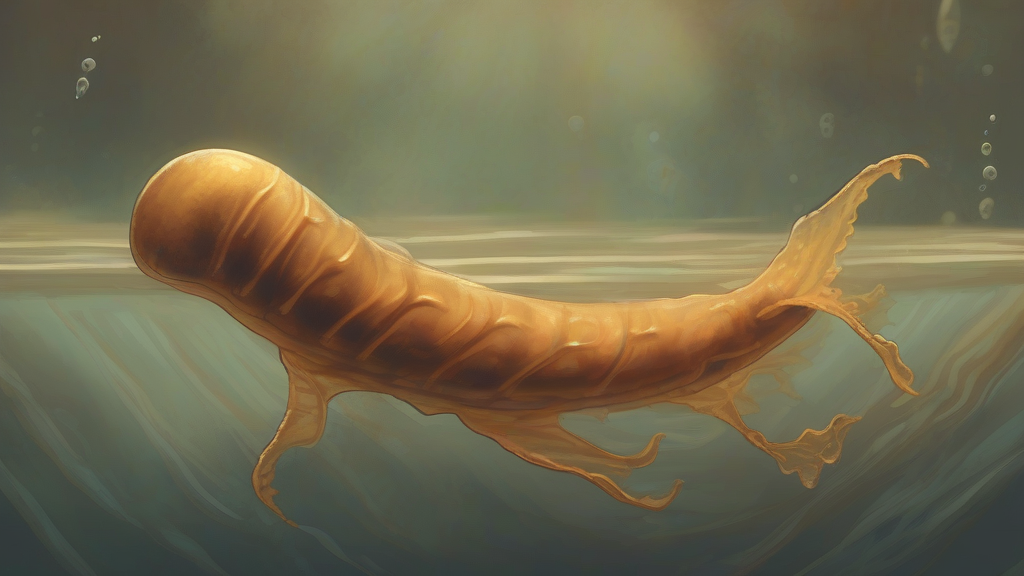
What does cercariae mean?
Cercariae are the plural of "cercaria," the name given to the free-swimming larval stage of trematode flatworms, commonly known as flukes. These microscopic organisms develop inside an intermediate host, usually a freshwater snail, and emerge into the surrounding water bearing a distinctive tail — often forked — which they use to propel themselves toward their next host. Depending on the species, they may penetrate the skin of a mammal, attach to a fish's gills, encyst on vegetation, or be swallowed by another animal. In parasitology and public health, cercariae are of central importance: they transmit diseases such as schistosomiasis, a major human illness in tropical regions, making their detection in water supplies a genuine medical concern. The word derives from the Greek "kerkos," meaning tail, a reference to the larva's most striking feature. Though confined largely to scientific writing, "cercariae" vividly captures a critical moment in the life cycle of some of the world's most widespread parasites.
noun (plural)The free-swimming, tadpole-like larval stage of trematode flatworms (flukes), produced within the snail host and released into water to infect the next host in the parasite's life cycle.
- The free-swimming larval stage of a trematode fluke that emerges from a snail intermediate host to infect the next host.
"Freshwater snails shed thousands of cercariae into the pond, where they seek out fish or mammals to infect."
"When water temperatures rise, infected snails release cercariae in enormous numbers."
"Under the microscope, the cercariae could be seen swimming vigorously with their characteristic forked tails."
"Cercariae" is itself the standard plural of "cercaria"; it takes a plural verb ("the cercariae are"). The singular "cercaria" should be used when referring to one individual.
"A single cercaria was observed penetrating the skin of the laboratory mouse."
Each cercaria is a tiny fork-tailed swimmer with one mission: burrow through skin in under a minute — and it has no gut, so it can't even eat.
Reviewed by Deb Chak, Editor. AI-assisted content curated by RJS Tech Solutions LLP.
Etymology of cercariae
The word comes from New Latin "cercaria," formed from the Greek "kerkos" meaning "tail," alluding to the larva's conspicuous swimming organ, combined with the Latin adjectival suffix "-arius." The term entered English scientific vocabulary during the nineteenth century as parasitologists formalized the study of fluke life cycles. It shares its Greek root "kerkos" with other tail-related terms such as "cirrus"-type formations in anatomy, though its closest relatives are fellow zoological coinages built from the same Greek element.
Related word forms
How cercariae is actually used
"Cercariae" is exclusively the plural of "cercaria"; it belongs to technical registers — parasitology, medicine, veterinary science, and aquatic ecology — and is rarely encountered outside them. The singular "cercaria" follows Latin first-declension plurals in -ae, like "larva/larvae."
Easily confused with cercariae
"Cercaria" is the singular form referring to one larva, while "cercariae" is its plural, referring to multiple such larvae.