What does chaff mean?
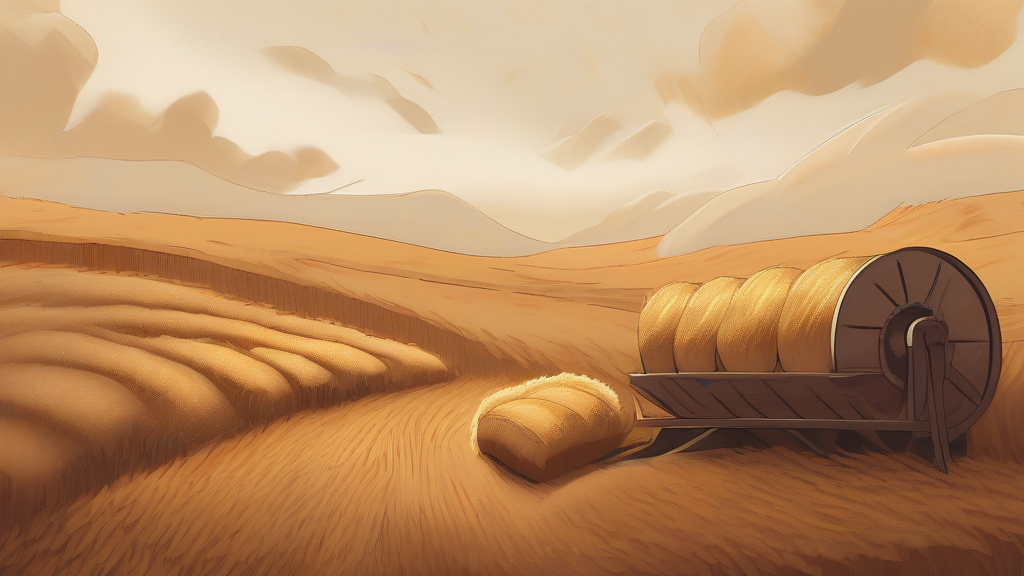
Chaff is the dry, inedible husks and fragments of stalk that surround grain seeds and are broken loose during threshing. Because it is so much lighter than the grain, farmers have traditionally winnowed it away on the wind, making chaff the natural emblem of whatever is worthless amid the valuable. Hence the enduring idiom 'to separate the wheat from the chaff', meaning to distinguish what is useful or true from what is not. In modern military usage, 'chaff' also denotes clouds of thin metallic strips dropped from aircraft to confuse radar-guided weapons. As an informal British verb, to chaff someone is to tease them good-naturedly, though this use is now rather old-fashioned and historically unrelated to the noun. The word carries a mildly dismissive flavour when used figuratively for empty talk or trivial content.
The husks and other inedible parts of grain separated from the seed during threshing; figuratively, worthless material or trivia.
"The threshing floor was covered in golden straw and pale chaff."
Most often encountered today in the figurative idiom 'the wheat from the chaff'.
To tease or banter with someone in a playful, good-humoured way.
"His colleagues chaffed him mercilessly about his new haircut."
Chiefly British and increasingly dated; distinct in origin from the noun, deriving from 'chafe'.
'Chaff' is an uncountable mass noun and has no plural form.
"A cloud of chaff rose from the threshing floor."
When radar operators talk about 'chaff', they mean clouds of aluminium strips scattered to fool enemy missiles — named after the useless husks farmers once blew away.
Reviewed by Deb Chak, Editor. AI-assisted content curated by RJS Tech Solutions LLP.
Etymology of chaff
The noun 'chaff' descends from Old English 'ceaf', meaning husks of corn, and has close relatives in other Germanic languages such as Dutch 'kaf'. Its ultimate deeper origins are uncertain. The verb 'to chaff', meaning to tease, appeared later and independently, derived from 'chafe' rather than from the noun.
Related word forms
How chaff is actually used
The noun is neutral in register but the figurative sense often carries a dismissive connotation. The verb 'to chaff' (meaning to tease) is chiefly British, somewhat dated, and is unrelated in origin to the noun — it comes from the same root as 'chafe'.
Easily confused with chaff
'Chafe' means to rub and irritate skin or to become annoyed, while 'chaff' refers either to grain husks or, as a verb, to teasing someone.