What does challot mean?
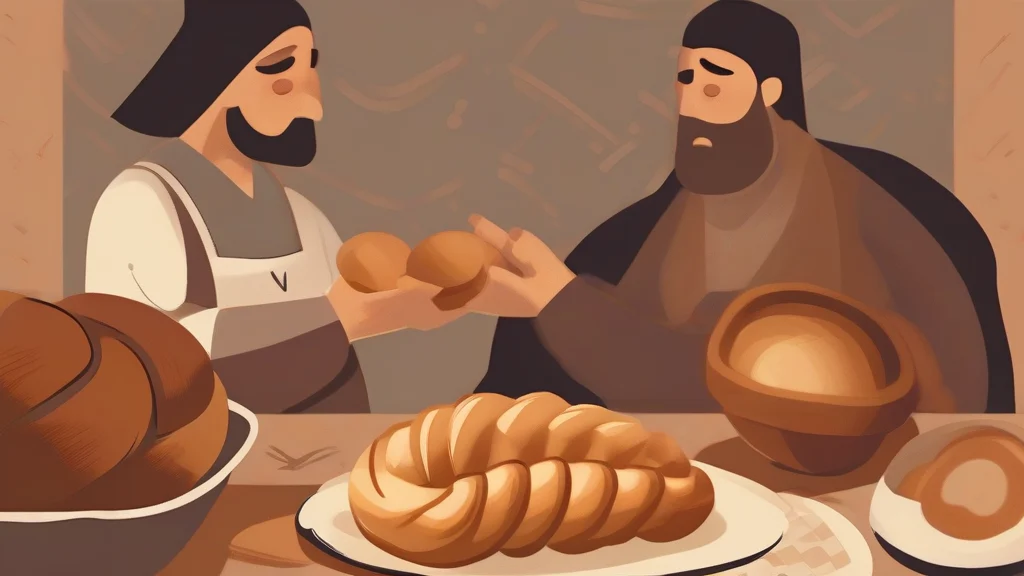
Challot is the Hebrew plural of challah, the richly textured, braided egg bread that holds a central place at the Jewish table. While a single loaf is called a challah, the form challot is used whenever more than one loaf is meant — as when two loaves are placed on the Sabbath table to recall the double portion of manna gathered in the wilderness. Baked from flour, eggs, oil, and sweetener, and often glazed with egg wash and sprinkled with sesame or poppy seeds, the bread carries deep ritual significance: it is the loaf over which the blessing is recited at Sabbath and festival meals. On Rosh Hashanah, challot are typically baked in a round shape, symbolizing the cycle of the year, and sometimes sweetened with honey or raisins. In general English usage the anglicized plural 'challahs' also appears, but challot remains the form favored in liturgical and cultural contexts.
nounChallot is the Hebrew-derived plural of challah, meaning the braided loaves of enriched egg bread traditionally eaten on the Jewish Sabbath and festivals.
- The plural of challah: multiple braided loaves of the enriched egg bread eaten on the Jewish Sabbath and holidays.
"She baked three challot for the Rosh Hashanah table, each one round and studded with raisins."
"Two fresh challot were set beneath the embroidered cover before Friday night dinner."
"The bakery sells round challot with honey during the High Holidays."
Challot is itself already the plural form (of challah); it takes no further plural ending. The singular is challah.
"Two golden challot rested under the Sabbath cloth."
One loaf is a challah — but put two on the Friday night table and you're serving challot, because Hebrew plurals don't take an -s.
Reviewed by Deb Chak, Editor. AI-assisted content curated by RJS Tech Solutions LLP.
Etymology of challot
Challot derives from Hebrew חלות (challot), the plural of חלה (challah), a word attested in the Hebrew Bible where it referred originally to a portion of dough set aside as a tithe for the priests. The root sense relates to ordinary bread or dough baked in the home. The word entered English through Ashkenazi Jewish communities in the nineteenth and twentieth centuries, alongside other Hebrew and Yiddish terms for ritual foods such as matzo and cholent, which share the same cultural rather than strictly linguistic origin.
Related word forms
How challot is actually used
Challot is the traditional Hebrew plural and is common in Jewish religious and community contexts; in general American usage, the anglicized 'challahs' is also widely heard. The word belongs to an elevated or culturally specific register and appears most often in writing about Jewish foodways and ritual.
Easily confused with challot
Challah refers to a single loaf of the Sabbath bread, while challot is simply its Hebrew plural form used when referring to more than one loaf.