What does chambermaid mean?
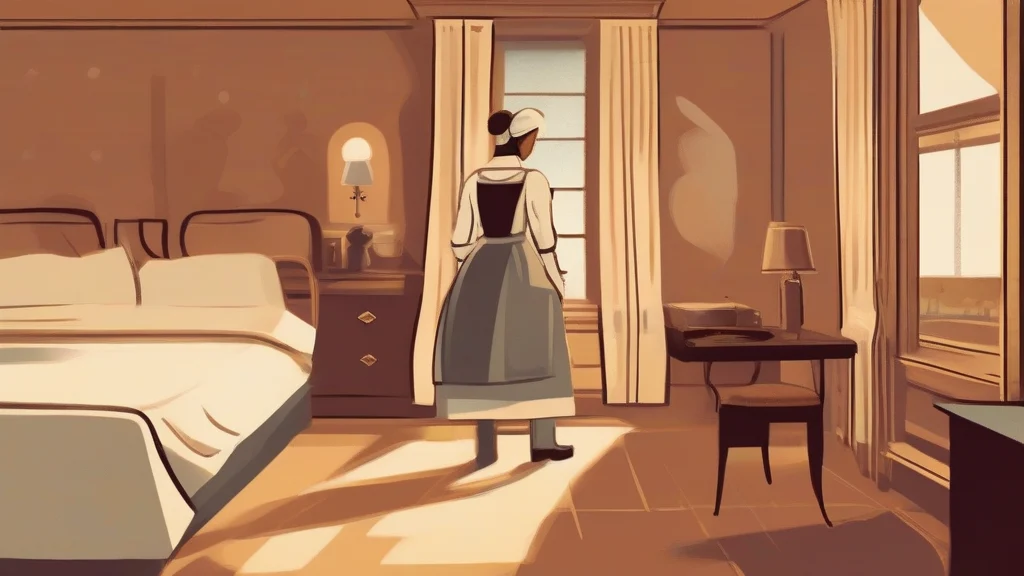
A chambermaid is a woman whose job is to clean and maintain bedrooms — traditionally those of a large private household, and in later usage, guest rooms in hotels and inns. The word combines 'chamber,' an old term for a room (especially a bedroom), with 'maid,' meaning a female servant, reflecting a time when domestic staff were organized by the specific rooms they tended. In grand Victorian homes, the chambermaid was responsible for lighting fires, changing linens, and keeping bedchambers in order, while in modern hospitality the role has shifted to servicing hotel guest rooms: making beds, replenishing towels and toiletries, and tidying between stays. Although still understood everywhere, the word has a distinctly old-fashioned flavor, and most hotels today prefer neutral terms such as 'room attendant' or 'housekeeping staff.' The term survives vividly in period fiction and historical writing, where it evokes an era of formal domestic hierarchies.
nounA woman employed in a hotel to clean and tidy guest rooms; historically, a female servant responsible for looking after the bedrooms of a private household.
- A woman hired to clean and service guest bedrooms in a hotel.
- (Historical) A female servant in a private house charged with caring for bedrooms and their occupants.
"The chambermaid refreshed the towels and left a chocolate on each pillow."
"The hotel chambermaid knocked gently before entering to turn down the beds."
"In Victorian households, the chambermaid rose before dawn to light the fires in the family's bedchambers."
Regular plural; standard in both British and American English.
"The hotel employed six chambermaids during the busy summer season."
The 'chamber' in chambermaid is the same word that gave us chamber music and chamber of commerce — it once simply meant 'a private room.'
Reviewed by Deb Chak, Editor. AI-assisted content curated by RJS Tech Solutions LLP.
Etymology of chambermaid
Chambermaid is a compound formed from two English words of distinct origin. 'Chamber' comes from Old French 'chambre,' itself derived from Latin 'camera,' meaning a vaulted room — the same Latin root that produced 'camera' and 'comrade' (via 'camerata,' one who shares a room). 'Maid' is a native Germanic word, a shortened form of 'maiden,' long used to mean a young unmarried woman or female servant. The compound arose in Middle English, likely in the late medieval or early modern period, as great households assigned servants to specific duties. Its Germanic-Romance blend makes it a characteristically English hybrid.
How chambermaid is actually used
The term is somewhat old-fashioned; modern hotels usually say 'housekeeping attendant,' 'room attendant,' or simply 'housekeeping.' It can sound dated or literary when applied to contemporary settings. Historically gender-specific ('-maid' denoting a female servant), so gender-neutral alternatives are often preferred today.
Easily confused with chambermaid
A chambermaid cleans guest bedrooms, while a housekeeper typically supervises cleaning staff or manages a whole household's domestic affairs.
A maidservant is a general female servant of a household, whereas a chambermaid specifically attends to bedchambers.