
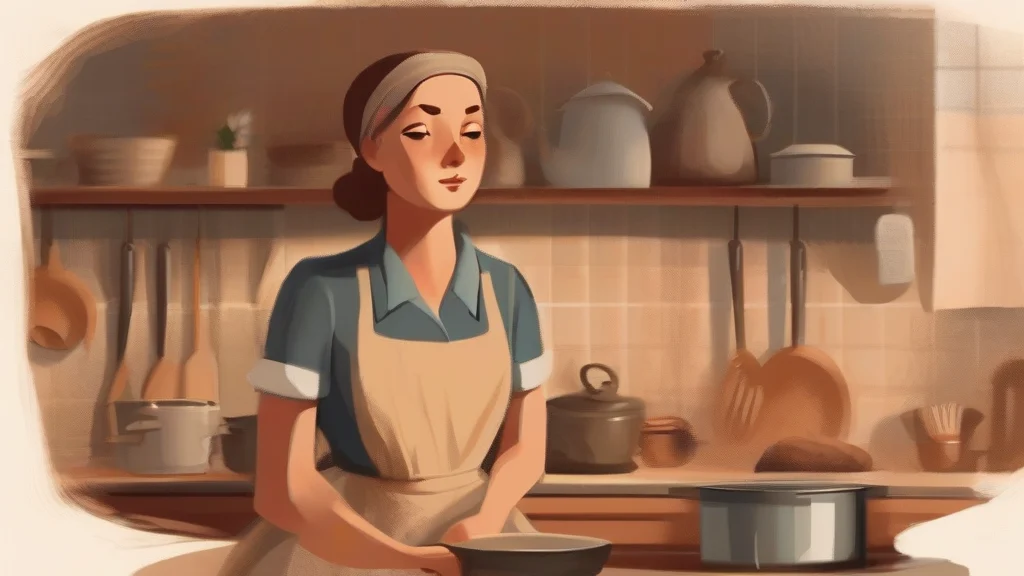
What does maid mean?
Maid most commonly denotes a female domestic servant, especially one whose duties include cleaning, cooking, and general household work. The term is still common in British and American speech, but when referring to domestic employment it can sound traditional or old-fashioned; “housekeeper,” “cleaner,” or “domestic worker” may sound more contemporary. In hotels and similar establishments, a maid is a woman who cleans and services guest rooms, a role often called a room attendant today. “Maid of honor” names the chief female attendant at a wedding, with “honour” used in British English. Historically, maid was broader and could refer to a young or unmarried woman; its modern occupational senses gradually became dominant. Pronounced /meɪd/, maid is etymologically connected with maiden and with Germanic words such as German Magd and Dutch maagd. It remains useful because it captures both a long-established household role and a familiar set of cultural and literary associations.
A female domestic servant or hotel room attendant; more generally, a woman serving in a household or hospitality role.
"The maid quietly announced that dinner was ready."
For a hotel employee, the modern term room attendant is often preferred.
To serve or work as a maid.
"She maided for a family in Cambridge after leaving school."
Rare and archaic, encountered mainly in older or highly literary usage.
The standard plural of the noun.
"The inn employs two maids."
Long before it commonly meant “servant,” maid could refer to a young or unmarried woman—a sense that survives in “maiden.”
Reviewed by Deb Chak, Editor. AI-assisted content curated by RJS Tech Solutions LLP.
Etymology of maid
Maid descends from Old English mægð, meaning a young woman, maiden, or virgin, and ultimately from a Germanic word shared by several closely related languages. Its modern meaning as a female servant reflects a gradual narrowing of the word’s earlier broader sense. The same Germanic root appears in English maiden, German Magd, Dutch maagd, and Icelandic mey.
Related word forms
How maid is actually used
The occupational noun remains current, especially in hospitality, but it can sound traditional or old-fashioned when describing domestic employment. In modern workplaces, housekeeper, cleaner, domestic worker, or room attendant may be preferred.
Easily confused with maid
Maid is a noun or rare verb pronounced like “made,” whereas made is the past tense of make and means “created” or “manufactured.”